ESP32 vs ESP32-S3 vs C3 vs C6: Full Specs & Buyer’s Guide
Ten chips. One family. Radical differences. From a 80-cent RISC-V node to a 400 MHz multimedia powerhouse — this is the only guide you need to pick the right Espressif chip for your next build.
Chips covered10
First release2016
Max CPU speed400MHz
Cheapest chip$0.80
Specs compared60+
01
Espressif Family
CHIP-BY-CHIP BREAKDOWN
“The original ESP32 is not the best ESP32 anymore — but it’s still the most useful one for most people. The trick is knowing which variant actually fits your project.”
MechatronicsForU — Build smarter, not harder
01
● 2016 · Xtensa LX6
ESP32
The original. Still the most popular.
Dual-core, Wi-Fi, Bluetooth Classic AND BLE 4.2. The only chip in the entire family with BT Classic — essential for A2DP audio and SPP serial. Largest community, most tutorials, best all-rounder.
Wi-Fi 4BT ClassicBLE 4.2Dual-Core
SRAM520 KB
CPU240 MHz
GPIO34 pins
Sleep~100 µA
// Best forGeneral IoT, home automation, BT audio (A2DP), ESP-NOW mesh, Arduino projects, audio streaming
02
● 2019 · Xtensa LX7
ESP32-S2
USB-native. 5× lower power sleep.
Dropped Bluetooth entirely to achieve 22 µA deep sleep — 5× better than the original. Gained native USB-OTG, making it perfect for USB HID devices without a UART bridge chip. CircuitPython’s favourite chip.
Wi-Fi 4USB-OTG22µA SleepNo Bluetooth
SRAM320 KB
CPU240 MHz
GPIO43 pins
Sleep~22 µA
// Best forUSB HID gadgets, battery devices, CircuitPython dev boards, USB cameras, low-power Wi-Fi sensors
03
● 2020 · Xtensa LX7 Dual
ESP32-S3
AI acceleration. The maker’s flagship.
The power upgrade of the family. Dual LX7 cores with vector/SIMD instructions for TFLite Micro edge AI. Native USB-OTG, BLE 5.0, DVP camera interface, 512 KB SRAM + up to 8 MB PSRAM. The go-to for smart cameras.
AI/MLBLE 5.0USB-OTGCamera
SRAM512 KB
CPU240 MHz
GPIO45 pins
Sleep~8 µA
// Best forEdge AI, face detection, TFLite Micro, smart cameras, USB gadgets, rich displays, voice recognition
04
● 2022 · RISC-V RV32IMC
ESP32-C2
Cheapest chip. ~$0.80 in volume.
Espressif’s budget champion. Wi-Fi 4 + BLE 5.0 in a tiny 4×4 mm QFN package for under a dollar. 272 KB SRAM, 14 GPIOs. Stripped to absolute essentials — use when cost is the primary constraint.
Wi-Fi 4BLE 5.0~$0.804×4 mm
SRAM272 KB
CPU120 MHz
GPIO14 pins
Sleep~5 µA
// Best forUltra-budget production nodes, cost-sensitive commercial IoT, simple Wi-Fi sensors, Matter end devices
05
● 2020 · RISC-V RV32IMC
ESP32-C3
The RISC-V sweet spot.
Wi-Fi 4 + BLE 5.0 + Secure Boot + Matter support — all for ~$1.20. 400 KB SRAM, ~5 µA deep sleep. The practical upgrade from the old ESP8266. Large community, Zephyr RTOS support, broadly available.
First ESP chip with Wi-Fi 6 (802.11ax). Also packs BLE 5.3, Thread, and Zigbee — all in one die. Full Matter protocol stack. The definitive chip for modern smart home product development.
Wi-Fi 6ThreadZigbeeMatter
SRAM512 KB
CPU160 MHz
GPIO30 pins
Sleep~7 µA
// Best forMatter devices, smart home hubs, Thread border routers, Zigbee coordinators, Wi-Fi 6 nodes
07
● 2023 · RISC-V RV32IMAC
ESP32-H2
No Wi-Fi. Pure mesh specialist.
Deliberately stripped of Wi-Fi to maximize mesh efficiency. Pure 802.15.4 + BLE 5.3 for Thread leaf nodes and Zigbee end devices. The best range-per-milliwatt chip in the entire family.
No Wi-FiThreadZigbeeBLE 5.3
SRAM256 KB
CPU96 MHz
GPIO26 pins
Sleep~7 µA
// Best forZigbee end devices, Thread leaf nodes, ultra-low-power mesh sensors, Matter over Thread
08
● 2024 · RISC-V RV32IMAFC
ESP32-P4
400 MHz. No wireless. Raw power king.
Espressif’s most powerful chip ever. 400 MHz dual-core, H.264 hardware video encode/decode, MIPI-DSI display and MIPI-CSI camera interfaces, 768 KB SRAM. No Wi-Fi or BT — pairs with a C6. Still early release.
400 MHzH.264MIPI-DSI/CSINo Wireless
SRAM768 KB
CPU400 MHz
GPIO54 pins
Sleep~20 µA
// Best forRich HMI displays, H.264 video processing, industrial panels, high-speed data, multimedia hubs
1B
Most Popular Modules — Deep Dive
ESP32-S3 WROOM · S3 MINI · C3 MINI · C6 MINI
“The MINI modules are where Espressif really nailed the balance between size, price, and capability. These three in particular dominate most new IoT product designs in 2024–2026.”
MechatronicsForU — Field Engineering Notes
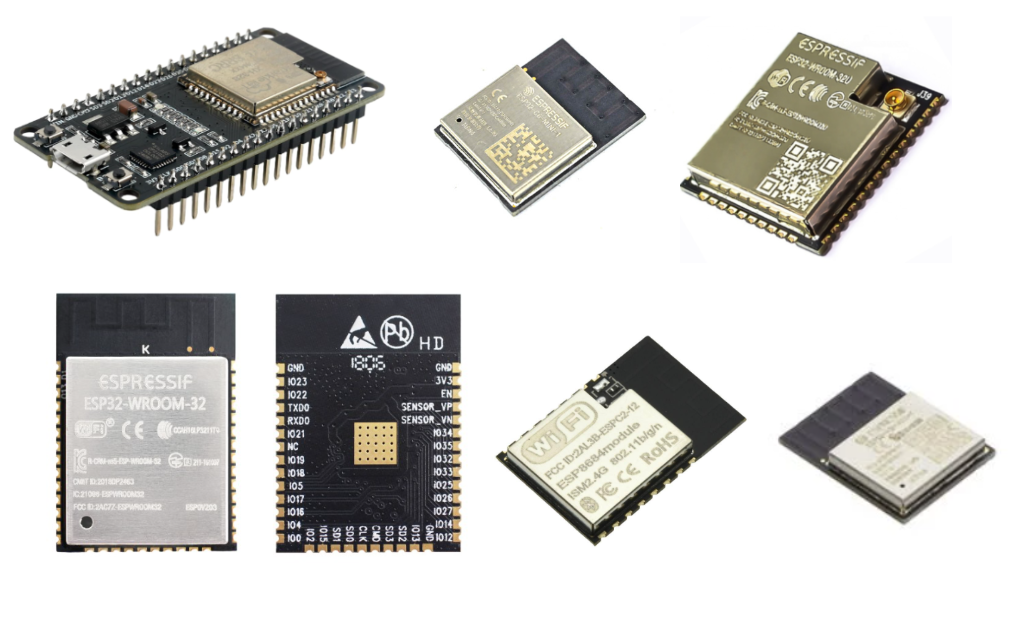
ESP32-S3-WROOM-1
Module · Dual-core 240 MHz · AI Acceleration · Wi-Fi 4 + BLE 5.0 · USB-OTG
// What makes it special
The ESP32-S3-WROOM-1 is the most capable pre-certified module Espressif makes. At its core is the ESP32-S3 SoC — Espressif’s first chip with vector instructions (PIE extensions) designed specifically for AI and DSP workloads. This makes it capable of running TFLite Micro models, wake-word detection engines, and image classification pipelines that would be impossible on the original ESP32.
The module comes in multiple flash/PSRAM variants — the N4 (4MB flash) for basic use, all the way to the flagship N16R8 (16MB flash + 8MB PSRAM) used in AI camera projects. The 8MB PSRAM is critical — it gives you enough RAM to buffer camera frames, run ML inference, and maintain a Wi-Fi connection simultaneously.
Native USB-OTG means it can appear as a USB HID device, CDC serial device, or MSC storage device — without any additional chip. Combined with the 45 GPIO pins (most in the family), it’s the go-to for complex maker projects and commercial products alike.
// Full Module Specifications
SoC
ESP32-S3
CPU
Dual Xtensa LX7 @ 240 MHz
Internal SRAM
512 KB
Flash Options
4 / 8 / 16 MB
PSRAM Options
None / 2 MB / 8 MB
Wi-Fi
802.11b/g/n (Wi-Fi 4), 2.4 GHz
Bluetooth
BLE 5.0 + BT Mesh
USB
USB-OTG 1.1 Full Speed
GPIO Pins
45 programmable
ADC
20 channels, 12-bit
Touch Sensors
14 capacitive
Camera (DVP)
Yes — up to OV2640
Deep Sleep
~8 µA
Module Size
18 × 25.5 × 3.1 mm
Antenna
PCB trace (WROOM-1) / U.FL (WROOM-1U)
Certifications
CE / FCC / TELEC / KCC
Est. Module Price
~$4–8 (N4) / ~$6–10 (N16R8)
// Ideal Use Cases
AI camera with OV2640 / OV5640
Face detection & recognition
Voice wake-word detection
TFLite Micro inference
USB HID (keyboard, gamepad)
Smart displays with LVGL
Wi-Fi + BLE dual mode apps
CircuitPython / MicroPython
// SDK & Framework Support
ESP-IDF v5.x (full support)
Arduino IDE (ESP32 core v2+)
MicroPython v1.22+
CircuitPython 9+
Zephyr RTOS
ESP-WHO (AI vision framework)
ESP-SR (speech recognition)
ESPHome (limited)
// DigiKey Part Numbers
ESP32-S3-WROOM-1-N4
ESP32-S3-WROOM-1-N8
ESP32-S3-WROOM-1-N16R8
ESP32-S3-WROOM-1U-N4
ESP32-S3-WROOM-1U-N16R8
ESP32-S3-WROOM-2-N32R8V ⚠ Obsolete
ESP32-S3-MINI-1
Module · Dual-core 240 MHz · AI Acceleration · Wi-Fi 4 + BLE 5.0 · Smallest S3 Package
PCB ANT
MINI-1 — On-board PCB Antenna
15.4 × 20.5 × 2.4 mm
Antenna built into PCB — no external connector needed. Best RF performance in open air.
U.FL ANT
MINI-1U — External U.FL Connector
15.4 × 15.4 × 2.4 mm
5mm shorter — no PCB antenna stub. Needs external antenna via U.FL cable. Better for enclosed metal cases.
// Key difference vs WROOM-1
The ESP32-S3-MINI-1 uses the same ESP32-S3 SoC as the WROOM-1 — same dual-core 240 MHz, same AI vector instructions, same BLE 5.0 and Wi-Fi 4. The difference is physical size and flash/PSRAM options. The MINI-1 is 2.8 mm shorter and 5 mm narrower than the WROOM-1, making it ideal for space-constrained PCB designs. The trade-off: fewer PSRAM options (max 8MB PSRAM on N8R8 variant) and slightly fewer exposed GPIO pads compared to WROOM-1.
// What makes it special
The MINI-1 gives you the full power of the ESP32-S3 — AI vector instructions, dual LX7 cores, USB-OTG, BLE 5.0 — but in a 15.4 × 20.5 mm footprint, making it the smallest ESP32-S3 pre-certified module available.
This size reduction matters enormously in wearables, compact smart devices, and any project where PCB real estate is limited. The MINI-1 uses a LGA (Land Grid Array) pad layout instead of the through-hole castellated pads of the WROOM — this means it’s only suitable for reflow soldering (not hand-soldering), making it more of a production module than a prototyping module.
The MINI-1 is available in three main variants: N4R2 (4MB flash + 2MB PSRAM — perfect for most embedded AI projects), N8R8 (8MB flash + 8MB PSRAM — for image processing and large model inference), and N4 (4MB flash only — no PSRAM, for simple Wi-Fi+BLE tasks where AI is not required).
Like the WROOM-1, it supports the full ESP-WHO computer vision framework and ESP-SR speech recognition stack. The USB-OTG port enables direct programming without a UART bridge, and the 27 exposed GPIO pads cover all common peripheral needs — I2C, SPI, UART, I2S, PWM, ADC.
The ESP32-C3-MINI-1 is Espressif’s answer to the question: “What if you could build a Wi-Fi + BLE product in the smallest possible footprint without sacrificing security?”
At just 13.2 × 16.6 mm, this is one of the most compact certified Wi-Fi+BLE modules available anywhere. It uses the ESP32-C3 SoC — a RISC-V single-core running at 160 MHz — making it the first ESP module built on an open-source ISA. This matters because RISC-V toolchains are increasingly preferred in commercial embedded development.
What really sets the C3 MINI apart is its security story. It ships with RSA-3072 based Secure Boot v2, AES-128-XTS flash encryption, digital signature peripheral, and HMAC-based device identity — security features that used to require expensive dedicated secure elements. Combined with native Matter protocol support, it’s become a default choice for mass-production smart home accessories.
The module also has a built-in USB Serial/JTAG peripheral — you can flash and debug it over USB without any external programmer, just a data USB cable.
// Full Module Specifications
SoC
ESP32-C3
CPU
Single RISC-V @ 160 MHz
Architecture
RISC-V RV32IMC (open ISA)
Internal SRAM
400 KB
Flash
4 MB embedded
Wi-Fi
802.11b/g/n (Wi-Fi 4), 2.4 GHz
Bluetooth
BLE 5.0 + Long Range
USB
USB Serial/JTAG (built-in)
GPIO Pins
22 programmable
ADC
6 channels, 12-bit SAR
Secure Boot
v2 (RSA-3072)
Flash Encryption
AES-128-XTS
Matter Support
Yes (Wi-Fi + BLE provisioning)
Deep Sleep
~5 µA
Module Size
13.2 × 16.6 × 2.4 mm
Antenna
PCB trace (MINI-1) / U.FL (MINI-1U)
Est. Module Price
~$2–5
// Ideal Use Cases
Battery-powered BLE sensors
Smart plugs & switches
Matter end-devices
ESP-NOW sensor networks
MicroPython IoT projects
Low-cost Wi-Fi + BLE combo
Wearable IoT devices
Industrial sensor nodes
// Compared to ESP8266
CPU Speed
2× faster (160 vs 80 MHz)
SRAM
10× more (400 vs 36 KB)
Bluetooth
BLE 5.0 (none on 8266)
Security
Secure Boot v2
Price diff
Only ~$0.50 more
// DigiKey Part Numbers
ESP32-C3-MINI-1-N4
ESP32-C3-MINI-1U-N4
ESP32-C3FH4 (bare SoC)
N4 = 4MB flash embedded U = U.FL external antenna
ESP32-C6-MINI-1
Module · Dual-core RISC-V 160 MHz · Wi-Fi 6 + BLE 5.3 + Thread + Zigbee · Full Matter Stack
// What makes it special
The ESP32-C6-MINI-1 is the most feature-packed small module Espressif has ever released. In a compact 21 × 18 mm footprint it combines four completely different radio technologies: Wi-Fi 6 (802.11ax), Bluetooth LE 5.3, IEEE 802.15.4 for Thread, and Zigbee. No other module at this price point comes close.
Wi-Fi 6 (802.11ax) is the headline feature. Compared to Wi-Fi 4 (802.11n), Wi-Fi 6 brings OFDMA (multiple devices share one channel more efficiently), TWT (Target Wake Time — devices sleep longer and wake on schedule, massively improving battery life in dense deployments), and BSS Coloring (reduces interference in crowded environments like apartment buildings or factories). For IoT, this isn’t about raw speed — it’s about coexistence and battery efficiency.
The dual RISC-V architecture is also unique: a 160 MHz HP core handles the main application while a 20 MHz LP (Low Power) core stays awake during sleep modes to monitor peripherals — all without waking the main CPU. This dramatically reduces average power in event-driven applications.
With a full Matter over Wi-Fi and Matter over Thread stack, the C6-MINI-1 is the reference module for smart home products targeting Apple Home, Google Home, Amazon Alexa, and Samsung SmartThings simultaneously.
// Full Module Specifications
SoC
ESP32-C6
CPU
Dual RISC-V: 160 MHz HP + 20 MHz LP
Internal SRAM
512 KB
RTC SRAM
32 KB (largest in family)
Flash
4 MB embedded
Wi-Fi
Wi-Fi 6 (802.11ax) — 2.4 GHz
Bluetooth
BLE 5.3 + Long Range + Mesh
IEEE 802.15.4
Thread + Zigbee
Matter
Full stack — Wi-Fi + Thread
GPIO Pins
30 programmable
USB
USB Serial/JTAG
Secure Boot
v2 + Digital Signature
Deep Sleep
~7 µA (LP core active)
Module Size
21 × 18 × 3.2 mm
Antenna
PCB trace (MINI-1) / U.FL (MINI-1U)
Est. Module Price
~$4–8
// Ideal Use Cases
Matter smart plugs & lights
Thread border router
Zigbee coordinator/router
Wi-Fi 6 sensor nodes
Apple Home / Google Home devices
Battery + Wi-Fi TWT devices
Smart home gateway
Industrial mesh networks
// Wi-Fi 6 vs Wi-Fi 4 (for IoT)
OFDMA
Shared channel slots
TWT Sleep
Scheduled wake = less power
BSS Color
Less interference in crowds
Dense deploy
50+ devices per AP
Backward compat
Works on Wi-Fi 4 routers
// DigiKey Part Numbers
ESP32-C6-MINI-1-N4
ESP32-C6-MINI-1U-N4
N4 = 4MB flash embedded U = U.FL external antenna Works with ESP-IDF v5.1+
02
All Variants Side-By-Side
FULL SPECIFICATION TABLE
How to read this table:Green = YES or best-in-class. Grey = No / not applicable. Red = best-in-family winner. Scroll right on mobile.
Specification
ESP32
ESP32-S2
ESP32-S3
ESP32-C2
ESP32-C3
ESP32-C6
ESP32-H2
ESP32-P4
IDENTITY
Release Year
2016
2019
2020
2022
2020
2022
2023
2024
Architecture
Xtensa LX6
Xtensa LX7
Xtensa LX7
RISC-V
RISC-V
RISC-V
RISC-V
RISC-V
CPU
CPU Cores
Dual (2)
Single
Dual (2)
Single
Single
Dual (2)
Single
Dual (2)
Max Frequency
240 MHz
240 MHz
240 MHz
120 MHz
160 MHz
160 MHz
96 MHz
400 MHz ★
AI / Vector Instructions
—
—
YES (PIE)
—
—
—
—
YES
FPU (Floating Point)
—
—
YES
—
—
—
—
YES
MEMORY
Internal SRAM
520 KB
320 KB
512 KB
272 KB
400 KB
512 KB
256 KB
768 KB ★
External Flash
Up to 16 MB
Up to 1 GB
Up to 1 GB
4 MB
4 MB
32 MB
4 MB
32 MB
PSRAM Support
Via SPI
Up to 128 MB
Up to 32 MB
—
—
Via SPI
—
Up to 32 MB
WIRELESS
Wi-Fi Standard
Wi-Fi 4
Wi-Fi 4
Wi-Fi 4
Wi-Fi 4
Wi-Fi 4
Wi-Fi 6 ★
None
None
Bluetooth Classic
YES ★ Only One
—
—
—
—
—
—
—
Bluetooth LE
BLE 4.2
None
BLE 5.0
BLE 5.0
BLE 5.0
BLE 5.3
BLE 5.3
None
Thread / Zigbee
—
—
—
—
—
YES ★
YES
—
Matter Protocol
Partial
—
Partial
—
Partial
YES ★
YES
—
GPIO & PERIPHERALS
Total GPIO Pins
34
43
45 ★
14
22
30
26
54 ★
DAC Channels
2 ch
2 ch
—
—
—
—
—
YES
Touch Sensors
10
14
14
—
—
—
—
YES
Native USB
—
USB-OTG 1.1
USB-OTG 1.1
—
USB Serial
USB Serial
USB Serial
USB 2.0 HS ★
Camera Interface
—
DVP
DVP ★
—
—
—
—
MIPI-CSI ★
Ethernet MAC
YES
—
—
—
—
—
—
GMAC
POWER
Deep Sleep Current
~100 µA
~22 µA
~8 µA
~5 µA ★
~5 µA ★
~7 µA
~7 µA
~20 µA
Supply Voltage
2.3–3.6 V
3.0–3.6 V
3.0–3.6 V
3.0–3.6 V
3.3 V typ
3.0–3.6 V
3.0–3.6 V
3.3–5 V
PRICING
Est. Chip Unit Price
~$2.00
~$1.50
~$2.00
~$0.80 ★
~$1.20
~$2.00
~$1.80
~$3.50
Est. Module Price
~$3–6
~$4–8
~$4–8
~$2–4
~$2–5
~$4–8
~$3–6
N/A
03
Protocol Support
WIRELESS MATRIX
Protocol / Standard
ESP32
S2
S3
C2
C3
C6
H2
P4
WI-FI
Wi-Fi 4 (802.11b/g/n)
✓
✓
✓
✓
✓
✓
—
—
Wi-Fi 6 (802.11ax 2.4GHz)
—
—
—
—
—
★ ONLY
—
—
BLUETOOTH
Bluetooth Classic (A2DP/SPP)
★ ONLY
—
—
—
—
—
—
—
BLE 4.2
✓
—
—
—
—
—
—
—
BLE 5.0
—
—
✓
✓
✓
—
—
—
BLE 5.3 + Long Range
—
—
—
—
—
✓
✓
—
MESH / 802.15.4
Thread Protocol
—
—
—
—
—
✓
✓
—
Zigbee Protocol
—
—
—
—
—
✓
✓
—
Matter (Full Stack)
—
—
—
—
—
★ Best
✓
—
OTHER
ESP-NOW (Espressif mesh)
✓
✓
✓
✓
✓
✓
✓
—
Native USB (OTG / HS)
—
OTG 1.1
OTG 1.1
—
—
—
—
USB 2.0 HS
Ethernet MAC
✓
—
—
—
—
—
—
GMAC
04
Decision Guide
PROJECT PICKER
“The worst mistake in embedded design is picking a chip based on what’s familiar rather than what fits. These cards will save you that mistake.”
MechatronicsForU — Embedded Systems Guides
// General IoT / Starting out
ESP32 Original
Largest ecosystem, most tutorials, Wi-Fi + BT Classic + BLE, dual-core, mature libraries. Thousands of Arduino projects available. Best starting point, period.
// Avoid ifYou need ultra-low power or BLE 5.0
// Battery / Ultra-Low Power
ESP32-C3
~5 µA deep sleep with Wi-Fi 4 + BLE 5.0. Secure Boot, Matter ready, RISC-V architecture. Best balance of features vs power consumption in the family.
// Avoid ifNeed BT Classic or heavy compute
// AI / Machine Learning Edge
ESP32-S3
Vector SIMD instructions, dual-core 240 MHz, 512 KB SRAM, TFLite Micro support. Only Wi-Fi+BLE chip in the family with true ML hardware acceleration.
// Avoid ifSimple sensor node (overkill + cost)
// Smart Home / Matter
ESP32-C6
Wi-Fi 6 + BLE 5.3 + Thread + Zigbee in one chip. Full Matter stack, 32 KB RTC SRAM. The definitive chip for new smart home product development.
// Avoid ifNeed BT Classic or high compute
// Camera / Vision
ESP32-S3
DVP camera interface, PSRAM for frame buffers, dual-core 240 MHz for concurrent Wi-Fi + camera. Used in all popular AI cam boards (AI-Thinker, Freenove).
// Avoid ifNeed 4K / MIPI — use P4 + C6 combo
// Zigbee / Thread Mesh
ESP32-H2
Dedicated 802.15.4 + BLE 5.3. No Wi-Fi = maximum mesh efficiency. Best range-per-mW in the family. Perfect Zigbee end device and Thread leaf node.
// Avoid ifWi-Fi required on same chip
// BT Classic Audio (A2DP)
ESP32 Original — Only Option
The ONLY chip in the entire ESP32 family with Bluetooth Classic. Required for A2DP audio streaming, SPP serial ports, RFCOMM profiles. No substitute.
// No alternativein the ESP32 family
// Budget / Cost-Critical
ESP32-C2
Cheapest Wi-Fi+BLE chip at ~$0.80 in volume. 4×4 mm QFN, 120 MHz RISC-V, ~5 µA sleep. Use when every rupee counts and peripherals are minimal.
// Avoid ifNeed many GPIOs, DAC, or touch
// USB Device (HID / MIDI)
ESP32-S2 or S3
Both have native USB-OTG 1.1 — no USB-to-serial chip needed. S3 adds BLE + dual-core if wireless and USB are both needed simultaneously.
// Avoid ifNeed BT Classic
// Max Performance / HMI
ESP32-P4
400 MHz dual-core, H.264 video, MIPI-DSI display, 768 KB SRAM. Fastest ESP chip ever. Pair with C6 for wireless. Still early release — check availability.
// Avoid ifBuilt-in Wi-Fi/BT required
05
DigiKey RF Transceiver Modules Cat. 872
MODULE REFERENCE
These modules are pre-certified, antenna-integrated, and ready to drop into your PCB. They save certification time — critical for commercial products. Data sourced from DigiKey India, Espressif datasheets.
The ESP32-P4 and ESP32-C5 remain in limited/preview availability as of mid-2026. Always verify stock on DigiKey or Mouser before designing them into production. Prices are approximate and fluctuate with supply. Verify all specs against the official Espressif datasheet for your specific chip revision.
Embedded systems are the unseen intelligence behind countless modern technologies from consumer electronics and automotive systems to medical devices and industrial automation. As the Internet of Things (IoT) and smart technology continue to proliferate, the demand for skilled embedded engineers is at an all-time high.
This guide provides a refined, step-by-step roadmap for aspiring professionals to acquire the necessary skills, build a compelling portfolio, and secure a rewarding position in this dynamic field.
1. Establish a Solid Foundational Knowledge
A successful career in embedded systems is built on a strong understanding of both electronics and computer science.
Electronics Principles: Gain a deep comprehension of core electronics concepts, including Ohm’s Law, Kirchhoff’s laws, and the characteristics of fundamental components like resistors, capacitors, inductors, diodes, and operational amplifiers.
Digital Electronics: Master the fundamentals of digital logic, including logic gates, combinational and sequential logic circuits, flip-flops, counters, and the architecture of Analog-to-Digital Converters (ADCs) and Digital-to-Analog Converters (DACs).
Microcontroller Architecture: Study the internal architecture of microcontrollers (MCUs), including their CPU, memory organization (RAM, ROM, Flash), and key peripherals such as Timers, Interrupt Controllers, and GPIOs.
Practical Application: Begin with accessible development platforms like Arduino for a gentle introduction. Progress to more powerful and industry-standard boards like STM32, ESP32, or PIC to apply your theoretical knowledge to real-world hardware.
2. Master the Art of Embedded Programming
Programming is the primary tool for an embedded systems engineer. Your proficiency in this area will define your capabilities.
C Programming (The Cornerstone): C is the foundational language for firmware development due to its close-to-hardware access and efficiency. Focus on mastering concepts critical to embedded systems:
Bitwise Operations: For manipulating hardware registers and flags.
Pointers and Memory Management: For direct memory access and efficient resource utilization.
Interrupt Service Routines (ISRs): For handling time-critical events.
volatile Keyword: A crucial concept for preventing compiler optimizations that could break hardware-dependent code.
C++ (The Next Step): C++ is increasingly used for developing more complex, scalable, and object-oriented embedded applications. Learn its object-oriented features while maintaining an awareness of performance and memory overhead.
Python: While not for core firmware, Python is invaluable for higher-level tasks such as scripting, automated testing, data analysis, and building back-end services for IoT applications.
3. Gain Substantial Hands-On Experience with Hardware
Theoretical knowledge is insufficient without practical experience. Actively engage with hardware to bridge the gap between code and physical reality.
Hardware Interfacing: Learn to interface with a variety of components, including sensors (temperature, light, pressure), actuators (motors, servos), displays (LCD, OLED), and relays.
Communication Protocols: Implement and debug code for essential communication protocols:
UART: For serial communication with a PC or other devices.
I²C & SPI: For on-board communication between MCUs and peripherals.
PWM: For controlling motor speeds and LED brightness.
CAN & Modbus: For industrial and automotive applications.
Project-Based Learning: Create projects that integrate multiple skills. Start with simple tasks like a temperature logger and advance to a multi-sensor weather station, a robot with motor control, or an IoT-enabled smart device.
4. Acquire Proficiency with Professional Development Tools
Professional embedded engineers rely on a specific set of tools to streamline their workflow and ensure code quality.
Integrated Development Environments (IDEs) & Toolchains: Become proficient with professional IDEs like STM32CubeIDE, Keil MDK, or IAR Embedded Workbench. Understand the role of the compiler, assembler, and linker in the build process.
Debugging Tools: This is a mission-critical skill.
JTAG/SWD Debuggers: Learn to use these hardware interfaces to set breakpoints, step through code, and inspect memory and registers in real-time.
Oscilloscopes: Essential for visualizing electrical signals to diagnose timing issues, signal integrity problems, and communication protocol errors.
Logic Analyzers: Perfect for capturing and analyzing multiple digital signals simultaneously, especially for bus protocols like I²C or SPI.
Version Control: Master Git and GitHub to manage your code, collaborate effectively, and showcase your projects to potential employers.
Documentation: Develop the habit of reading and understanding hardware datasheets and reference manuals—these are the bibles for any embedded project.
5. Explore Advanced and Specialized Topics
As you progress, delve into more complex areas to make yourself a more versatile and valuable candidate.
Real-Time Operating Systems (RTOS): Learn to use an RTOS like FreeRTOS or Zephyr to manage multiple concurrent tasks, handle scheduling, and improve system responsiveness.
Wireless Communication: Study protocols for connectivity, such as Wi-Fi, Bluetooth Low Energy (BLE), LoRaWAN, and cellular technologies.
Low-Power Design: Understand techniques for optimizing power consumption, which is critical for battery-powered devices and the vast majority of IoT applications.
Embedded Linux: For more complex applications on single-board computers like the Raspberry Pi or BeagleBone Black, learn about Linux kernel drivers, device trees, and the build systems (e.g., Yocto, Buildroot).
6. Build and Showcase a Strong Project Portfolio
A robust portfolio of hands-on projects is your most effective resume. Employers want to see what you can build, not just what you know.
Project Ideas:
Smart Home System: An MCU-controlled system with sensors, actuators, and a mobile app interface.
BLDC Motor Controller: A complex project demonstrating control theory and PWM expertise.
Data Logger: A system that collects sensor data and stores it on a non-volatile medium like an SD card.
Wearable Health Tracker: A project that uses BLE to transmit data from a heart rate or accelerometer sensor.
Documentation: For each project, write a detailed README file explaining the problem, your solution, the hardware used, and the challenges you faced.
Online Presence: Upload your projects to GitHub with clean, commented code. Consider creating a personal website or using LinkedIn to showcase your work and share your insights.
7. Demystifying Embedded Systems Troubleshooting
Debugging is an essential and often challenging part of the job. A structured approach to problem-solving will save you countless hours.
Common Problems & Troubleshooting Strategies:
The Code Doesn’t Run at All:
Check Power: Use a multimeter to verify the board is receiving the correct voltage.
Verify Connections: Double-check all wiring and connections. A single misplaced wire can prevent the entire system from booting.
Look for a Blinking LED: A “Hello World” program that blinks an LED is the first and most critical sanity check. If it works, the MCU is likely running.
It Runs, But Not as Expected (Logic Errors):
Use the Debugger: Set breakpoints to halt execution at specific lines. Step through the code line by line and inspect variable values and register states to find where the logic diverges from your expectation.
Print Statements: Use printf or serial logging to print variable values and messages at different stages of the code. This is an old but effective way to trace program flow.
Timing Issues:
Hardware Timers: If a task needs to execute at a precise interval, use a hardware timer and its interrupts, not software delays (delay()).
Race Conditions: When multiple tasks or an interrupt and the main loop access the same shared data, use a mutex or disable interrupts temporarily to protect the critical section.
Hardware/Software Integration Problems:
I²C/SPI Communication Failures: Use a logic analyzer to check the signals. Are the clock and data lines toggling correctly? Are the address and data values correct? Is there a slave acknowledge (ACK) bit?
Unstable Signals: Use an oscilloscope to check the signal integrity. Look for ringing, overshoot, or glitches that might be causing communication errors. Adjusting pull-up/pull-down resistors or trace routing can sometimes solve these issues.
Power-Related Issues:
Brown-Outs: Use an oscilloscope to check the power rail for voltage drops. An unstable power supply can cause the MCU to reset or behave erratically.
Current Spikes: A motor starting or a wireless module transmitting can draw a large current, causing a voltage drop. Consider using a large capacitor on the power rail to smooth out these spikes.
8. Navigate the Job Market and Land Your First Role
Once your skills and portfolio are ready, you can confidently begin your job search.
Resume/CV: Tailor your resume to each job description. Highlight your hands-on projects, specific hardware and protocol knowledge (e.g., “Experienced with I²C, SPI, and CAN Bus protocols on STM32 microcontrollers”), and proficiency with professional tools.
Job Titles to Search: Look for roles like Embedded Software Engineer, Firmware Engineer, IoT Developer, or Robotics Engineer.
Target Industries: Embedded engineers are in high demand in the automotive, robotics, consumer electronics, aerospace, defense, and medical device sectors.
Interview Preparation: Be prepared to discuss your projects in detail. Practice explaining your problem-solving process and how you debugged specific issues.
9. Cultivate a Mindset of Continuous Learning
The embedded systems landscape is constantly evolving. Staying at the forefront requires a commitment to lifelong learning.
Emerging Technologies: Keep an eye on new trends like RISC-V architectures, Edge AI/TinyML, and embedded cybersecurity.
Community Engagement: Participate in online forums, join local meetups, and follow key industry leaders to stay informed and expand your network.
A career in embedded systems is both intellectually stimulating and deeply rewarding. By focusing on fundamental principles, building practical projects, and embracing a systematic approach to problem-solving, you can build a successful and enduring career in this exciting field.
Inductors and transformers are fundamental passive components in electronics that operate based on the principles of electromagnetism. An inductor is a single coil of wire that stores energy in a magnetic field and resists changes in current flow. A transformer, on the other hand, consists of two or more coils that transfer electrical energy between separate circuits without a direct connection, typically to step up or step down voltage levels. While both use magnetic fields, an inductor’s primary function is energy storage and filtering, whereas a transformer’s is energy transfer and voltage conversion.
Inductor and Transformer Classifications
Fixed Inductors
A fixed inductor is a component with an unchangeable, specified inductance value. Its design, including the core material, number of wire turns, and physical form, is set at the time of manufacture. Common types are classified by their core material, such as air core (for high frequencies), ferrite core (for high efficiency), and iron core (for high inductance at low frequencies). Different physical forms, like axial, radial, or surface-mount chip inductors, are chosen based on circuit board layout requirements. Fixed inductors are essential for a wide range of functions, from smoothing out electrical current to filtering out unwanted frequencies.
Applications:
Power filtering: Used in DC power supplies to reduce ripple current and ensure a clean, stable voltage output.
RF circuits: Employed in radios and wireless devices for filtering, impedance matching, and creating resonant circuits.
EMI/RFI suppression: Ferrite beads and chokes are used to block high-frequency noise on power and signal lines.
Variable Inductors
A variable inductor is a component whose inductance can be adjusted after installation. This is typically accomplished by moving a magnetic core, often made of ferrite or powdered iron, into or out of the coil windings. Changing the core’s position alters the magnetic flux linkage, thereby changing the inductance. This tunability makes them crucial in applications where precise frequency adjustment or circuit calibration is required. Their design often includes a small screw or adjustment mechanism.
Applications:
Radio tuning circuits: Used in old-style radios to tune to a specific frequency.
Adjustable filters: Found in communication equipment to precisely tune the filter’s cutoff frequency.
Impedance matching: Used to match the impedance of an antenna to a transmitter for maximum power transfer.
Transformers
A transformer is a passive electrical device that transfers energy between two or more circuits through electromagnetic induction. It consists of a primary winding and one or more secondary windings. By varying the turns ratio between the primary and secondary coils, a transformer can step up or step down AC voltage and current. Transformers are vital for transmitting electricity over long distances and are found in almost all electronic devices that plug into a wall outlet.
Applications:
Power conversion: Used in power supplies to step down the high voltage from the mains to a lower, safer voltage for electronics.
Isolation:Isolation transformers provide electrical separation between two circuits, preventing current from flowing directly and ensuring safety.
Signal coupling: Used in audio and RF circuits to transfer signals and match impedances, ensuring signal integrity.
Specialized functions:Flyback transformers and pulse transformers are used in switching power supplies and gate drive circuits for specific voltage regulation and isolation.
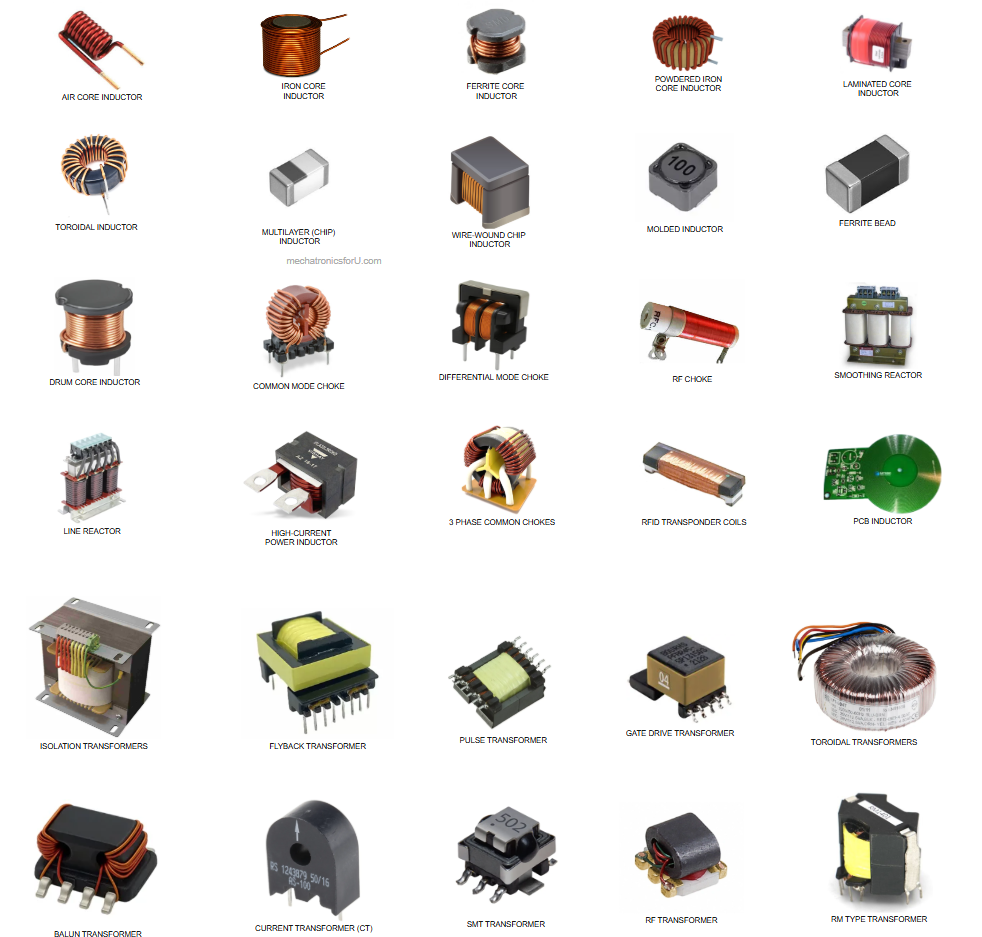
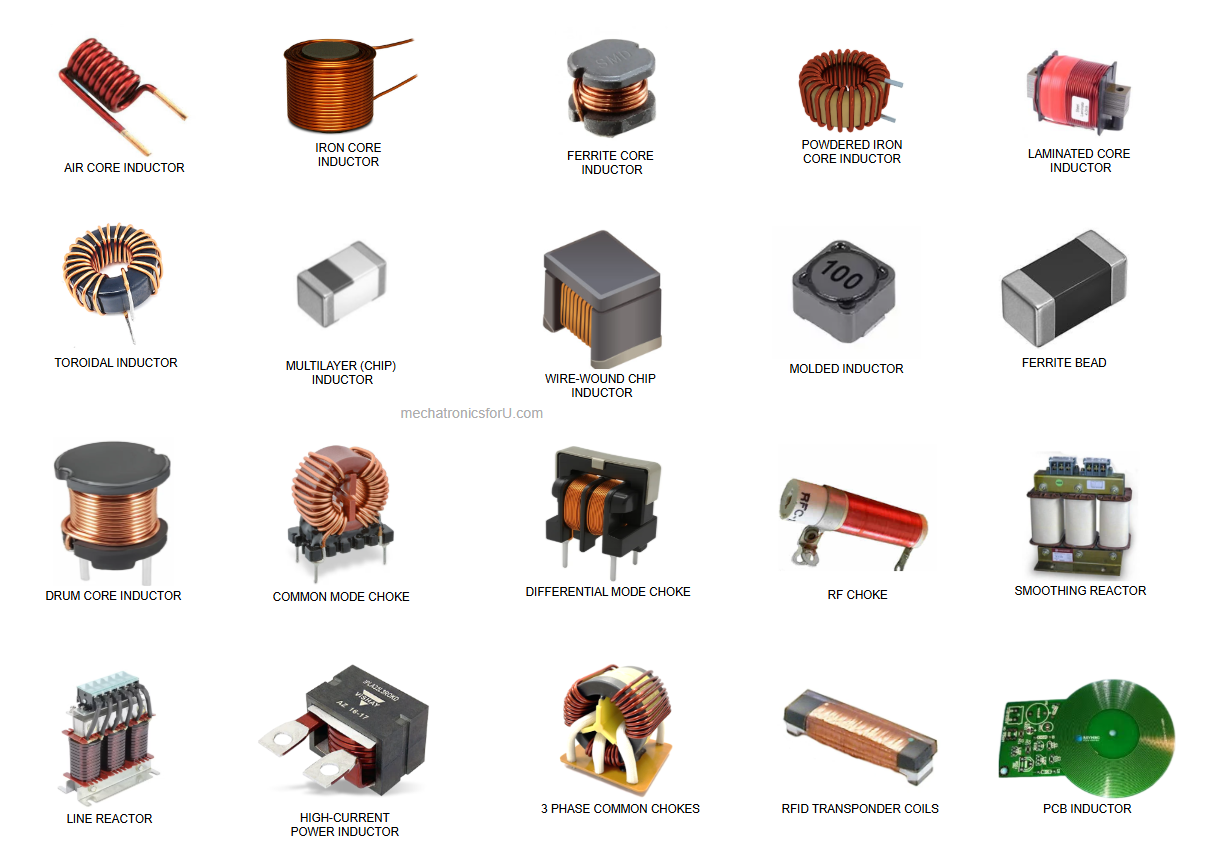
Fixed inductors
An inductor is a passive two-terminal electrical component that stores energy in a magnetic field when electric current flows through it. It is typically made of a wire coiled around a core (which can be air, ferrite, or iron) and its ability to store energy is measured by its inductance, which is expressed in henries (H). The fundamental property of an inductor is its opposition to a change in current flowing through it. It acts like a temporary current reservoir, smoothing out fluctuations in a circuit. They are essential for filtering, energy storage, and in resonant circuits.
Key Concepts
Inductance (L): The property of an inductor that determines how much magnetic energy is stored for a given current. A higher inductance value means a stronger opposition to current changes.
Energy Storage: The energy stored in an inductor’s magnetic field is given by the formula E=21LI2.
Voltage-Current Relationship: The voltage across an inductor is proportional to the rate of change of current (v=Ldtdi), which is why it resists sudden current changes.
Analogy
Think of an inductor as an electrical flywheel. Just as a mechanical flywheel resists a sudden change in rotational speed, an inductor resists a sudden change in electrical current. It takes time and energy to build up or collapse the magnetic field, which is why an inductor cannot instantly change its current. This property makes it invaluable for smoothing out choppy currents from power supplies.
Diffrent type of inductors
Air Core Inductor
An air core inductor has no magnetic core material, with its core being air, plastic, or a similar non-magnetic substance. This design gives it a linear inductance, meaning its value doesn’t change with current, and it eliminates core losses and saturation. Because of these properties, it’s ideal for high-frequency applications where linearity and minimal loss are critical, despite having a lower inductance per turn compared to core-based inductors. Applications: Used in high-frequency RF circuits, power amplifiers, and filters in radio transmitters and receivers.
Iron Core Inductor
An iron core inductor utilizes a solid iron core, which has a very high magnetic permeability. This significantly increases inductance for a given number of turns, making it effective for providing high inductance. However, solid iron cores suffer from high eddy current losses at higher frequencies and are prone to saturation, where the inductance drops sharply if the current exceeds a certain level. Applications: Primarily used in low-frequency, high-power applications such as power supplies, large filters, and chokes.
Ferrite Core Inductor
Ferrite core inductors use a ceramic compound of iron oxide and other metal oxides. Ferrites have high magnetic permeability and high electrical resistivity, which dramatically reduces eddy current losses at high frequencies compared to iron cores. They are the most common core material for high-frequency applications, providing high efficiency but can still saturate if the magnetic flux becomes too strong. Applications: Widely used in RF circuits, switching power supplies, EMI filters, and signal processing.
Powdered Iron Core Inductor
These inductors are made from cores of finely powdered iron particles, each insulated from the other and compressed into a toroid or other shape. The insulation limits eddy currents, allowing them to operate at higher frequencies than solid iron cores. They have a softer saturation characteristic than ferrite cores, meaning inductance decreases gradually, making them more resilient to large current swings. Applications: Common in power chokes, DC-DC converters, and EMI filters that handle large currents and require stable inductance across varying loads.
Laminated Core Inductor
A laminated core inductor is constructed from thin, insulated sheets of soft iron or steel. The insulation between the laminations significantly reduces eddy current losses by preventing large circulating currents from forming within the core material. This makes them more efficient than solid iron cores for applications involving AC currents. Applications: Primarily used in power transformers, high-current chokes, and large filters operating at line frequencies (50/60 Hz).
Toroidal Inductor
A toroidal inductor is wound around a doughnut-shaped core. This geometry creates a closed magnetic flux path that confines the magnetic field almost entirely within the core. This design minimizes the magnetic field that radiates outwards, which reduces interference with nearby components and increases the inductor’s efficiency. Applications: Used as power chokes, filters, and in switching power supplies and audio amplifiers due to their low EMI and high efficiency.
Drum Core Inductor
A drum core inductor is wound on a cylindrical core with a flat cap. The winding is typically a single layer on the cylindrical part, and a cap is placed on top. This open-air design is simple and cost-effective but provides limited magnetic shielding, allowing some magnetic flux to radiate outwards. Applications: General-purpose filtering, DC-DC converters, and power supply applications where a compact and inexpensive component is needed and EMI is not a critical concern.
Multilayer (Chip) Inductor
A multilayer chip inductor is a miniature surface-mount device (SMD) created by stacking multiple layers of conductive and dielectric material, similar to a multilayer ceramic capacitor. The traces are typically printed in a spiral pattern to form the coil. They are compact, mass-produced, and suitable for high-frequency applications. Applications: Used for decoupling, filtering, and resonance in compact circuits like smartphones, tablets, and other high-density consumer electronics.
Wire-Wound Chip Inductor
A wire-wound chip inductor is an SMD component made by winding fine wire around a magnetic or non-magnetic core. This construction provides higher current handling and a higher Q factor (quality factor) compared to multilayer chip inductors. They are a common type of RF inductor due to their superior performance characteristics. Applications: Employed in RF circuits, impedance matching, and filters for high-performance wireless communication devices and other high-frequency applications.
Molded Inductor
A molded inductor is an inductor whose wire windings and core are completely encased in a solid molded material, such as epoxy. This construction provides mechanical stability and protection from the environment. Molding also creates a robust, compact component that can be easily surface-mounted. Applications: Used in power supplies, DC-DC converters, and other power applications that require a rugged, mechanically stable inductor.
Ferrite Bead
A ferrite bead is a passive electronic component that acts as a low-pass filter, suppressing high-frequency noise. It consists of a cylinder or bead of ferrite material through which a wire passes. The bead presents a high impedance to high-frequency signals, dissipating their energy as heat. Applications: Used for EMI suppression, filtering noise on power lines and signal lines in digital circuits, computers, and consumer electronics.
Common Mode Choke
A common mode choke consists of two windings on a single magnetic core. The windings are arranged so that common mode currents (currents flowing in the same direction on two lines) generate a strong magnetic flux, resulting in high impedance. However, differential mode currents (flowing in opposite directions) produce opposing magnetic fields, resulting in near-zero impedance. Applications: Used in EMI filters on power supply lines and data lines (e.g., USB, Ethernet) to suppress common mode noise, which is a major source of interference.
Differential Mode Choke
A differential mode choke has a single winding on a core or multiple windings that act to impede differential mode currents (the useful signal or power current) while having no effect on common mode currents. This is the more traditional type of inductor used for power filtering. Applications: Employed in power supply filters to smooth out the ripple current in a DC power supply or to filter out noise on a differential signal line.
RF Choke
An RF choke is an inductor specifically designed to block high-frequency AC signals while allowing lower frequency or DC signals to pass. Its inductance value is chosen to provide a high impedance at a specific radio frequency or range of frequencies. They are crucial for isolating RF from DC power rails. Applications: Used in RF amplifiers, receivers, and oscillators to block RF signals from the power supply, or to prevent RF signals from reaching other parts of the circuit where they could cause interference.
Line Reactor
A line reactor is a high-power inductor placed in series with the AC power line. Its primary purpose is to add impedance to the circuit to limit inrush current, improve voltage balance, and reduce harmonics. It also acts as a filter to protect equipment from voltage spikes and sags on the power line. Applications: Used in industrial motor drives, Variable Frequency Drives (VFDs), and large power supply systems to protect equipment and improve power quality.
Smoothing Reactor
A smoothing reactor is a large inductor used in DC circuits to smooth out fluctuations in the current. It is typically found in DC power supplies and is designed to have a high inductance and to handle large DC currents. Its function is to reduce the ripple current coming from a rectifier. Applications: Found in high-voltage DC power supplies, rectifiers, and high-power industrial equipment.
High-Current Power Inductor
A high-current power inductor is specifically designed to handle large currents without saturating. This is achieved through the use of a robust magnetic core, such as powdered iron, and thick wire windings to minimize resistance and power loss. They are used in circuits where efficiency and heat management are critical. Applications: Employed in high-power DC-DC converters, battery charging systems, and motor control circuits.
Automotive-Grade Inductor (AEC-Q200)
This is not a type of inductor defined by its core or form, but rather by its quality and reliability standards. These inductors are certified to meet the AEC-Q200 standard, which specifies requirements for passive components used in the demanding automotive environment. This includes resistance to temperature extremes, vibration, and humidity. Applications: Used in automotive electronics, including engine control units, infotainment systems, and ADAS (Advanced Driver-Assistance Systems), where high reliability is essential.
Printed Spiral Inductor (PCB Inductor)
A printed spiral inductor is a type of planar inductor where the coil is created by a copper trace directly on a printed circuit board. They are highly compact and integrated but have a lower inductance and a lower Q factor compared to wound inductors. Applications: Found in RF integrated circuits, Bluetooth modules, and other miniature high-frequency circuits where on-chip or on-board integration is required.
3 Phase Common Chokes
A 3-phase common choke is a type of common mode choke designed specifically for use in 3-phase power systems. It works by having a winding for each of the three phases on a single core. Its purpose is to suppress common mode noise that exists on all three power lines, preventing it from radiating or affecting sensitive equipment. Applications: Used in motor drives, inverters, and power supplies for 3-phase industrial equipment to meet EMI regulations.
RFID Transponder Coils
An RFID transponder coil is a specialized air core inductor designed to function as an antenna. It is a key part of an RFID system, where the coil receives power from and transmits data to an RFID reader via electromagnetic induction. The inductance and size of the coil are carefully tuned to resonate at a specific frequency. Applications: Found in RFID tags, key fobs, and contactless payment systems to enable wireless communication and power transfer.
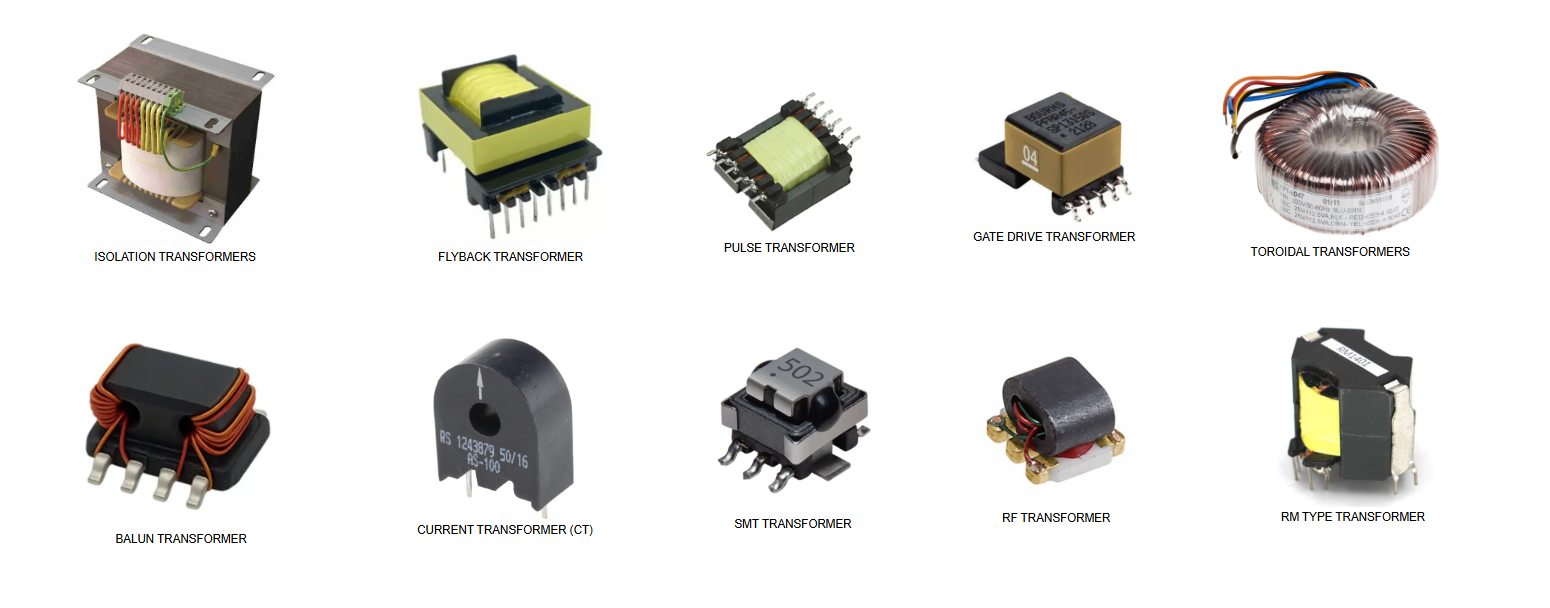
Different types of transformers
Isolation Transformers
An isolation transformer transfers electrical power from an AC source to some equipment or device while isolating the powered device from the power source. It has a 1:1 turns ratio and is designed to prevent the transfer of direct current (DC) and provide safety from electric shock. By blocking DC and disrupting ground loops, it protects sensitive equipment and provides a safer environment for technicians working on circuits. Applications: Used for safety in medical equipment, laboratory power supplies, and audio systems to eliminate hum.
Flyback Transformer
A flyback transformer, or flyback converter transformer, is a type of coupled inductor used in a flyback power supply topology. Unlike a standard transformer that transfers energy directly, a flyback transformer stores energy in its core’s magnetic field during the “on” period of a switch. During the “off” period, this stored energy is transferred to the secondary winding and the load. Applications: Fundamental in the design of low-power DC-DC converters, AC-DC adapters, and switching power supplies for consumer electronics.
Pulse Transformer
A pulse transformer is a transformer specifically designed to transmit rectangular electrical pulses with minimal distortion. It is built with a core that avoids saturation from the DC component of the pulse and has low-leakage inductance to maintain the pulse shape. Their primary function is to provide electrical isolation and impedance matching for pulse signals. Applications: Used in gate drive circuits for power semiconductors (IGBTs, MOSFETs), signal isolation, and telecommunications.
Gate Drive Transformer
A gate drive transformer is a small transformer that provides electrical isolation between the low-voltage control circuitry and the high-voltage gate of a switching device like a MOSFET or IGBT. It delivers a sharp, isolated pulse to turn the power semiconductor on or off, thereby protecting the control circuit and ensuring proper operation. Applications: Essential in high-voltage DC-DC converters, motor controllers, and other power electronics that require isolated gate drives.
Balun Transformer
A balun is a passive device that transforms an electrical signal from a balanced line to an unbalanced line, or vice versa. It works by providing impedance transformation and common-mode rejection. Baluns are crucial for connecting balanced antennas or differential signal lines to unbalanced coaxial cables, preventing signal distortion and improving noise immunity. Applications: Found in RF and microwave circuits, antennas, and differential signaling systems like Ethernet.
Current Transformer (CT)
A current transformer is a type of transformer used for measuring AC current. It has a primary winding with very few turns (often just the conductor passing through the core) and a secondary winding with many turns. It steps down the current to a measurable level while providing electrical isolation from the high-current circuit, making it safe for measurement devices. Applications: Used in AC current measurement, energy metering, and protective relaying in power systems.
SMT Transformer
An SMT (Surface-Mount Technology) transformer is a compact transformer designed to be directly mounted on the surface of a printed circuit board. These miniature transformers are ideal for applications where space is limited and automated manufacturing is used. Their low profile and high-frequency operation make them suitable for modern electronics. Applications: Widely used in compact power supplies, telecommunications equipment, and DC-DC converters in handheld devices.
RF Transformer
An RF transformer is a transformer designed to operate at radio frequencies. Unlike power transformers, they are not used to transfer large amounts of power but rather for impedance matching and isolation. They are carefully constructed to minimize parasitic capacitance and inductance, which are critical at high frequencies. Applications: Essential in RF mixers, modulators, and impedance matching networks in radio communication systems.
Toroidal Transformers
Toroidal transformers are wound around a doughnut-shaped core, which almost completely confines the magnetic field within the core. This design results in a very high efficiency and a significantly lower external magnetic field compared to standard laminated transformers. Their compact size and quiet operation are major advantages. Applications: Used in high-end audio amplifiers, medical equipment, and any application where low noise and high efficiency are required.
RM Type Transformer
An RM type transformer uses an “RM” (Rectangular Module) core. This core shape is designed to be compact and efficient for power applications. The core’s rectangular cross-section and mounting pins make it easy to integrate into PCB designs. The design is optimized for high power density and effective heat dissipation. Applications: Commonly used in switching power supplies, telecommunications, and power conversion equipment where space is at a premium.
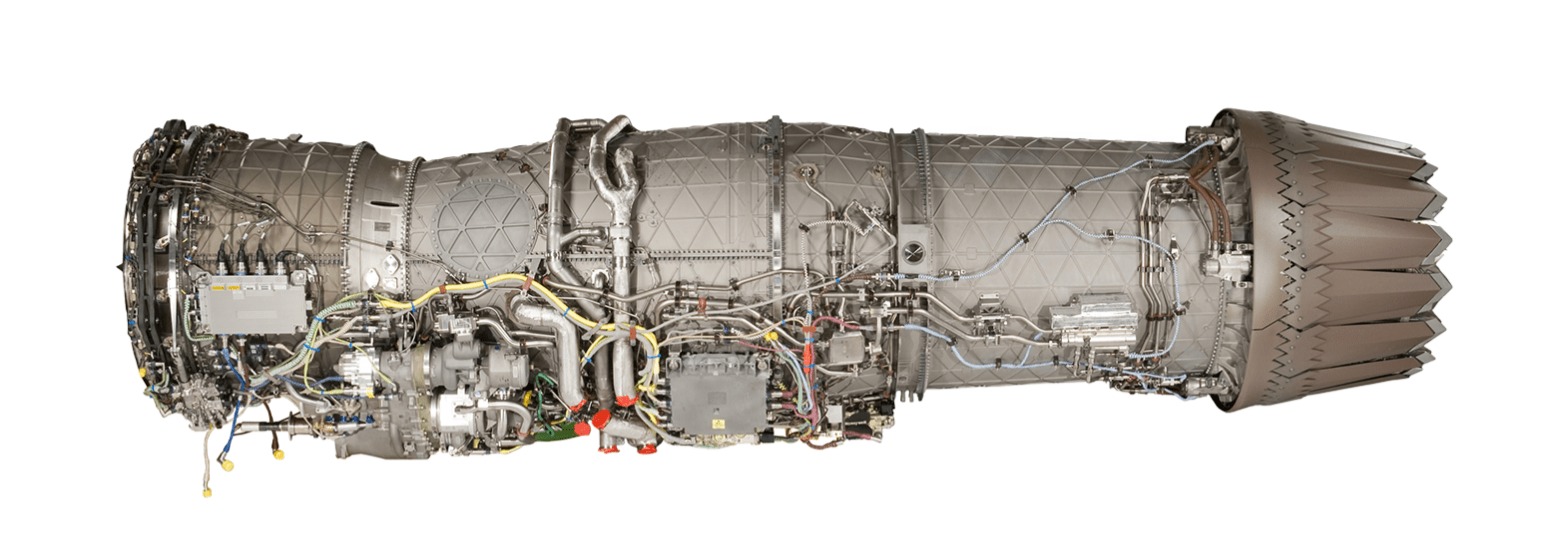
At the heart of the F-35 Lightning II’s unmatched performance lies the Pratt & Whitney F135 engine, a true marvel of modern aerospace engineering. This isn’t just an engine; it’s a fully integrated, mechatronic system that combines mechanical, electrical, computer, and control engineering to achieve unprecedented levels of power, stealth, and reliability.
A Symphony of Systems: The Mechatronics of the F135
The F135 is a masterclass in mechatronics, where every mechanical component is managed by sophisticated electronic controls. The engine’s Full Authority Digital Engine Control (FADEC) acts as its central nervous system. This computer system precisely manages all aspects of engine operation, from fuel flow and air intake to thrust vectoring. Using thousands of sensors and complex control algorithms, the FADEC ensures peak performance and efficiency while maintaining safety.
Pushing out more than 40,000 pounds of thrust, the F135 is the most powerful engine ever designed for a fighter jet. This immense power is managed by a hydro-mechanical actuation system that is electronically controlled, a perfect example of a mechatronic feedback loop. The engine’s stealth isn’t just about its shape. It’s a key part of its mechatronic design. The sawtooth-patterned nozzle and radar-absorbent coatings are strategically integrated to reduce the engine’s radar cross-section. The FADEC also manages the engine’s internal temperature to reduce its infrared signature, a critical part of maintaining the F-35’s stealth envelope.
For an incredible, behind-the-scenes look at how this engine is made and tested, you can watch the video below.
This video from the Sam Eckholm channel gives you an inside look at the Pratt & Whitney facility in Middletown, Connecticut. It covers the history of the campus, the detailed assembly process of the F135, and even a live engine test [11:09], offering a fascinating glimpse into the technology.
Unrivaled Performance and Reliability
Since its first flight in 2006, the F135 has consistently exceeded a 94% full mission capability rate. This is a testament to its robust design and the precision of its mechatronic controls, which constantly monitor the engine’s health. The F135 features an advanced digital health management system. This system uses real-time data from a network of sensors to predict and diagnose potential issues before they become critical. This predictive maintenance approach significantly reduces downtime and ensures the engine is always mission-ready.
The F135’s design is optimized for all three F-35 variants—the conventional takeoff and landing F-35A, the short takeoff and vertical landing F-35B, and the carrier-based F-35C. The F-35B variant, in particular, uses a unique shaft-driven lift fan and a swivel nozzle to achieve vertical flight, both of which are controlled by complex mechatronic systems that precisely coordinate engine thrust and fan power.
The Path Forward: Upgrades and Evolution
Pratt & Whitney has continually improved the F135. They have already reduced production costs by over 50% and are now focused on making the engine more efficient with the Engine Core Upgrade (ECU). The ECU will use updated thermal management systems and more efficient components to meet the growing power and cooling needs of the F-35’s future upgrades, ensuring this engineering marvel remains the heartbeat of air superiority for decades to come.
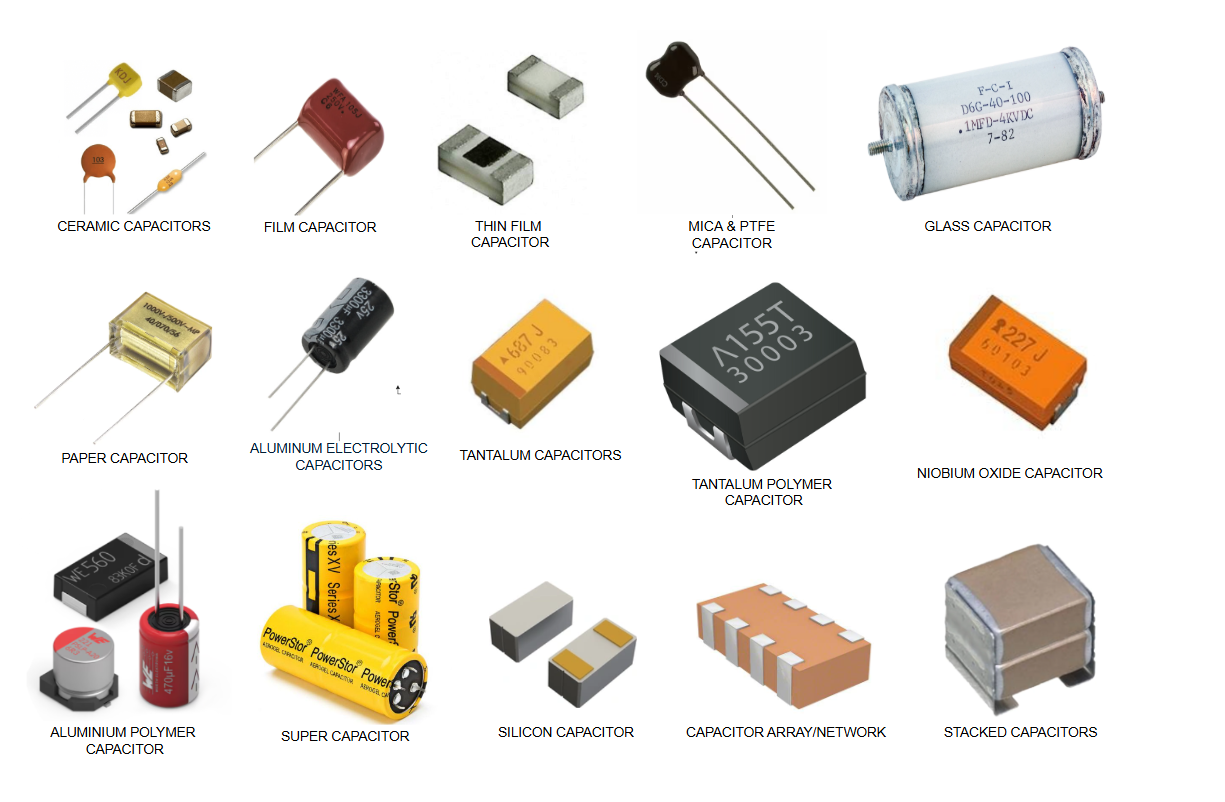
Capacitors are one of the most versatile passive components in electronics. They are used for energy storage, filtering, timing, tuning, and noise suppression. The many types of capacitors differ by their dielectric material, structure, tolerance, and application area. This article organizes them into Fixed, Variable, and Specialty groups, covering both common and advanced families.
Fixed Capacitors
Ceramic Capacitors
These components use a ceramic material as the dielectric. Class 1 types, such as C0G (NP0), are valued for their high stability and low losses, making them suitable for precision applications in RF circuits, oscillators, and timing circuits. Class 2 and 3 ceramics, like X5R and X7R, offer higher capacitance in a smaller footprint due to their higher dielectric constant, though they are less stable with temperature fluctuations. Their primary use is in decoupling circuits, where they filter high-frequency noise from power lines, and as general-purpose bypass capacitors on circuit boards, particularly in the form of multilayer ceramic chips (MLCCs).
Film Capacitors
Comprised of thin plastic films (polyester, polypropylene, or PTFE), film capacitors are known for their stable electrical properties, low Equivalent Series Resistance (ESR), and long operational life. Polypropylene capacitors are favored in audio and AC motor circuits for their low loss characteristics, while polyester types serve as a general-purpose, cost-effective alternative. In power electronics, these capacitors function as snubbers, protecting semiconductor switches from damaging voltage spikes.
Thin Film Capacitors
This type of capacitor is manufactured using highly precise vacuum deposition techniques to create ultra-thin dielectric layers. The result is a component with exceptional precision and excellent performance at very high frequencies. Their applications are concentrated in high-frequency circuit design, such as impedance matching and filtering, and in sensitive instrumentation where precision and stability are paramount.
Mica and PTFE Capacitors
Utilizing mica or PTFE as the dielectric, these capacitors exhibit remarkable stability and low losses. Mica capacitors are particularly noted for their high quality factor (Q) and are indispensable in stable RF oscillators and precision filters. PTFE capacitors, with their superior thermal and electrical properties, are used in very demanding applications, including aerospace systems.
Glass Capacitors
Constructed with a glass dielectric, these components are hermetically sealed and highly resistant to environmental degradation. Their exceptional stability, high insulation resistance, and very high voltage ratings make them suitable for mission-critical applications where failure is unacceptable. They are commonly found in aerospace, military, and nuclear systems where radiation hardening and extreme reliability are required.
Paper Capacitors (Obsolete)
Historically, these capacitors were created by rolling up strips of metal foil and paper, which was then impregnated with a material like wax or oil to enhance insulation. While largely replaced by modern capacitor types, they are still used by enthusiasts in the restoration of vintage radios and tube amplifiers to maintain historical accuracy and a specific audio aesthetic.
Aluminum Electrolytic Capacitors
These are polarized capacitors that provide very high capacitance at a low cost. They consist of an aluminum foil anode and a liquid electrolyte. Their primary function is in power supply units, where they smooth rectified DC voltage, and in audio circuits for coupling and power filtering.
Wet Aluminum Capacitors
A subtype of aluminum electrolytic capacitors, these are distinguished by their liquid-soaked electrolyte. They are typically large and used in high-voltage industrial applications and older designs where massive capacitance is needed for power supply filtering or motor starting.
Aluminum – Polymer Capacitors
Unlike their wet counterparts, these capacitors use a solid, conductive polymer as the electrolyte. This results in a significantly lower ESR and a high ripple current rating, making them ideal for high-speed switching power supplies and for filtering power rails for processors and other high-current components on motherboards.
Tantalum Capacitors
Polarized and featuring a dielectric of tantalum oxide, these capacitors offer a very high capacitance-to-volume ratio, making them compact and suitable for space-constrained designs. Their small size and reliability are a benefit in portable electronics, medical devices, and aerospace systems.
Tantalum – Polymer Capacitors
By combining tantalum’s high capacitance density with a conductive polymer electrolyte, these components achieve an even lower ESR than traditional tantalum capacitors. This makes them highly effective in filtering power for high-speed digital and telecom equipment.
Niobium Oxide Capacitors
This is a modern alternative to tantalum capacitors. They are similar in construction but are notable for their safer failure mode, which is typically an open circuit rather than a short. This makes them a more reliable choice for portable and consumer electronics where safety is a key concern.
Supercapacitors (EDLC, Ultracapacitors)
These are not conventional capacitors but rather energy storage devices that can store a very high amount of charge. They operate on an electrochemical principle and can be charged and discharged rapidly. They are used for short-term power backup, in regenerative braking systems, and to provide high current bursts for devices like camera flashes.
Hybrid Supercapacitors
These capacitors combine the high power density of an electric double-layer capacitor with the higher energy density of a pseudocapacitor. They are an ideal solution for applications where both high power output and good energy storage are needed, such as in certain electric vehicle or industrial power systems.
Silicon Capacitors
Fabricated using standard semiconductor processes, silicon capacitors are exceptionally small, stable, and have very low leakage current. Their precise and compact nature makes them suitable for use in medical implants, on-chip RF circuits, and other applications where high reliability and miniaturization are essential.
Capacitor Networks / Arrays
These are single-package components that house multiple capacitors, typically for use on SMD PCBs. They help to save board space and simplify assembly by providing multiple filtering or decoupling capacitors in one compact part. They are widely used in high-density digital circuit designs.
Stacked Capacitors (MLCCs)
A manufacturing technique used to create MLCCs with a very high capacitance. By stacking many layers of dielectric and electrode plates, a high capacitance can be achieved in a small volume. They are the most common capacitor type in modern electronics, from smartphones to IoT devices.
Type
Description
Typical Applications
Ceramic Capacitors
Use ceramic dielectric; Class I (stable), Class II/III (high capacitance)
Decoupling, filtering, RF
Film Capacitors
Use plastic films (polyester, polypropylene, PTFE); stable, low ESR
Audio, motor drives, power supplies
Aluminum Electrolytic
Polarized; high capacitance; liquid electrolyte
Power filtering, bulk energy storage
Aluminum-Polymer
Solid polymer electrolyte; lower ESR than liquid types
High-speed digital, VRMs
Tantalum Capacitors
Compact, stable; polarized; solid electrolyte
Space-constrained, high-reliability circuits
Tantalum-Polymer
Use conductive polymer; better ESR and ripple handling
Mobile devices, SSDs
Niobium Oxide
Safer failure mode than tantalum; solid electrolyte
Portable electronics
Mica Capacitors
Use natural mica dielectric; extremely stable
RF, timing, precision analog
PTFE Capacitors
Use Teflon dielectric; high temperature and stability
Aerospace, RF
Silicon Capacitors
Thin-film silicon dielectric; ultra-stable and compact
Medical, automotive, RF
Thin Film Capacitors
Use vacuum-deposited layers; high precision
Instrumentation, aerospace
Electric Double Layer (EDLC)
Supercapacitors; store energy via double-layer mechanism
Backup power, energy harvesting
Capacitor Networks / Arrays
Multiple capacitors in one package; saves PCB space
Imagine you’re assembling a circuit for a DIY robot or custom audio setup, and you reach for a resistor—that small yet essential component of electronics. These tiny devices control electrical flow, protect sensitive components, and prevent circuit damage. Resistors, however, come in many varieties. From robust workhorses in industrial equipment to precision components in medical devices, the selection is vast. Let’s examine each type, understand their unique characteristics, and discover their real-world applications.
The Heart of a Resistor
At its core, a resistor is like a traffic cop for electrons, slowing down current to keep things safe and stable. Its resistance, measured in ohms (Ω), follows Ohm’s Law: Voltage (V) = Current (I) × Resistance (R). When picking a resistor, you’re looking at:
Resistance Value: How much it resists current (from milliohms to megaohms).
Power Rating: How much heat it can handle (think watts, not sweat).
Tolerance: How close it sticks to its promised resistance.
Temperature Coefficient: How it behaves when things heat up or cool down.
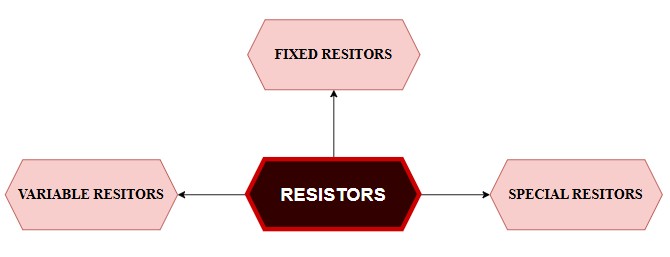
Resistors fall into three camps: fixed (set in stone), variable (adjustable), and special (reactive to the environment). Let’s dive into each, with a twist of practical know-how.
Fixed Resistors: The Steady Eddies
Fixed resistors are passive components with a constant resistance value. They play a vital role in controlling current, setting bias points, dividing voltages, and protecting circuits. Below is a detailed breakdown of important types, categorized by construction, features, and applications.
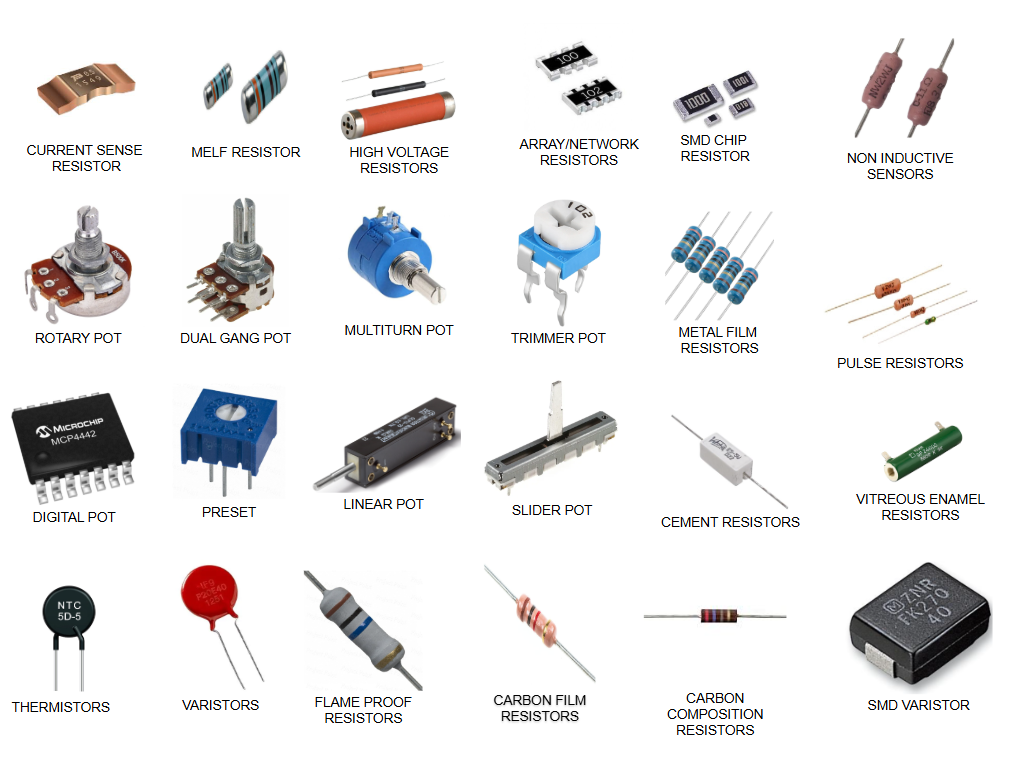
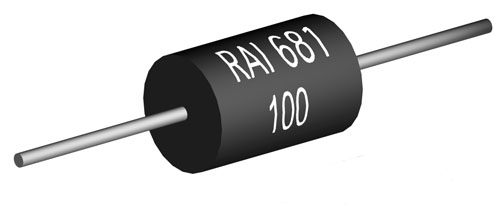
Carbon Composition Resistors
Made from carbon powder mixed with resin and molded into a cylindrical body with embedded leads. Their bulk structure allows them to handle high-energy pulses and surges, which was critical in older power supplies. However, they suffer from poor temperature stability, aging drift, and high electrical noise. Tolerances are loose, typically ±5% to ±20%. Applications: Widely used in vintage radios, tube amplifiers, and CRT televisions. Today they’re mostly obsolete but still valued for restoration projects and surge-prone circuits.
Carbon Film Resistors
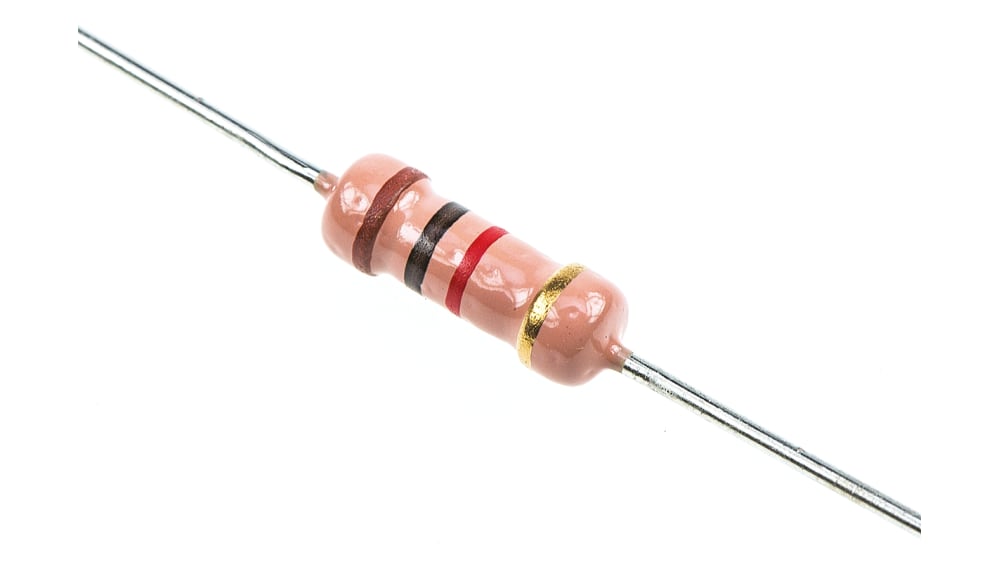
Built by depositing a thin film of carbon onto a ceramic rod and trimming it into a spiral shape to achieve the resistance value. They offer better noise performance and stability compared to carbon composition, with tolerances of ±2% to ±5%. Applications: Standard choice for consumer electronics, radios, televisions, and hobby projects due to low cost and decent performance.
Metal Film Resistors
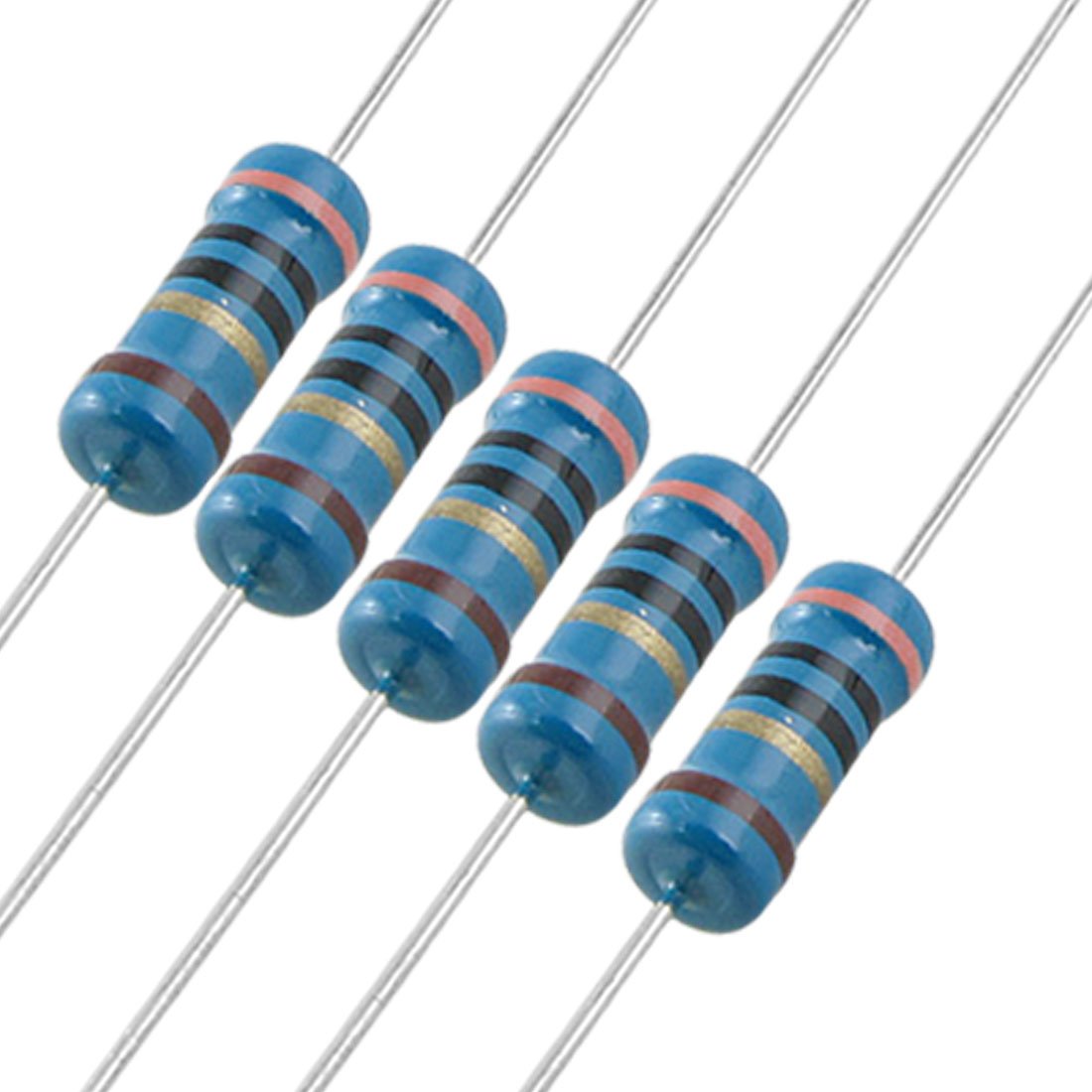
Feature a thin nickel-chromium layer vacuum-deposited onto a ceramic substrate. They are known for high accuracy (±0.1% to ±1%), low temperature coefficient, and very low noise levels. Applications: Found in audio preamps, measurement instruments, analog circuits, and applications where stable, precise resistance is critical.
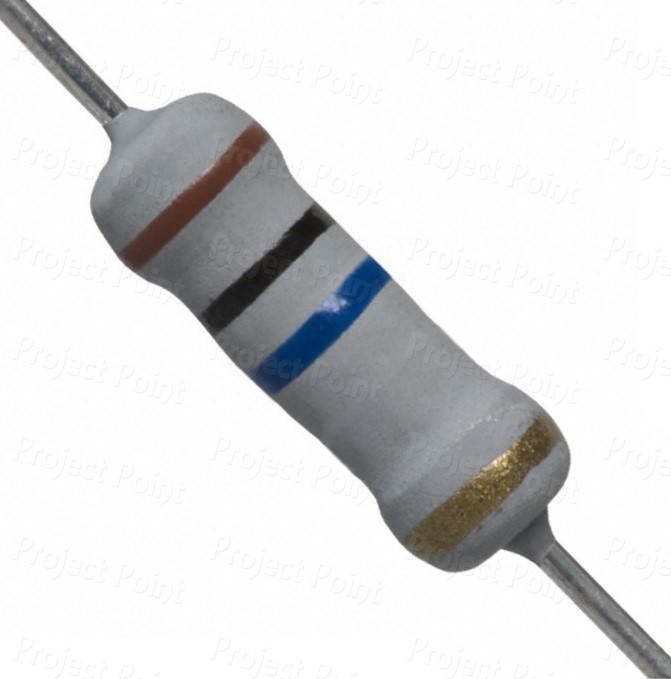
Metal Oxide Film Resistors
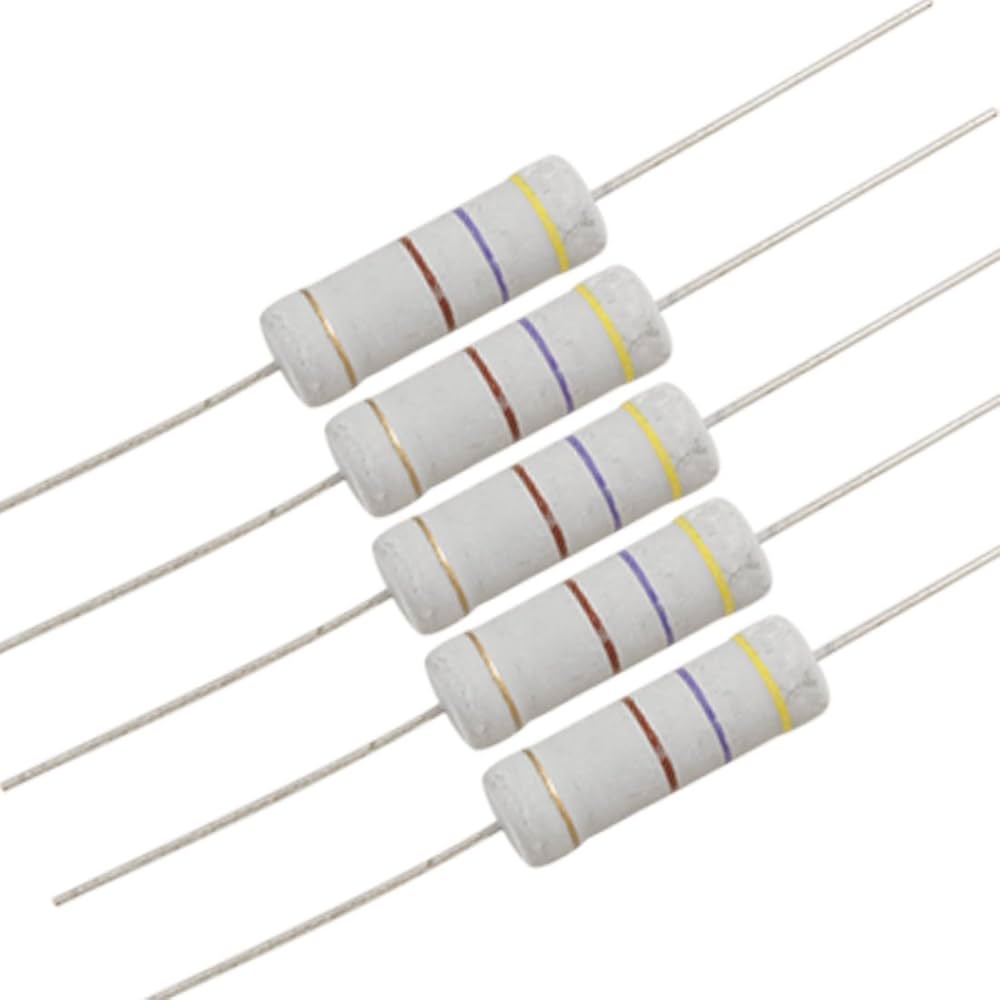
Made by depositing a tin oxide film on a ceramic rod, then covered with flameproof epoxy. They are rugged, heat-resistant, and flame-retardant, with tolerances around ±1% to ±5%. They outperform carbon and metal film in high-temperature environments. Applications: Industrial circuits, motor drivers, high-wattage power supplies, and harsh operating conditions.
Wirewound Resistors
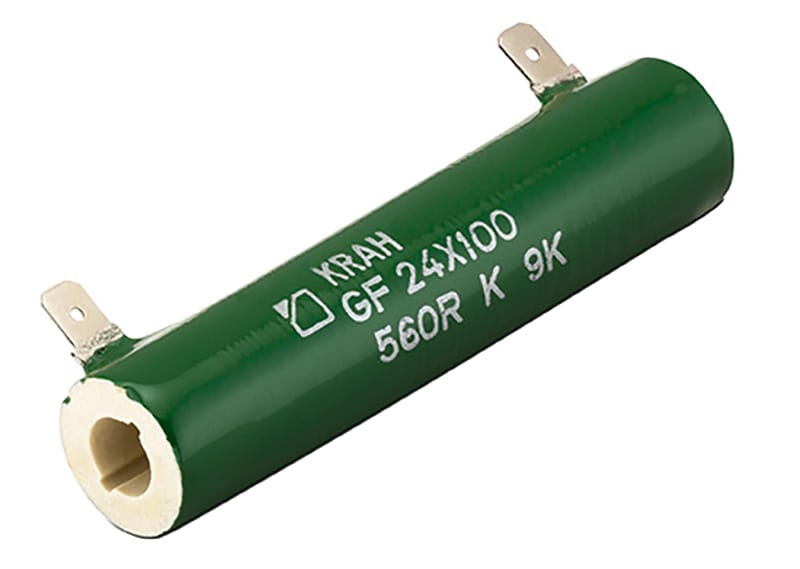
Consist of resistive wire, usually nichrome or manganin, wound around a ceramic or fiberglass core. They can handle very high power dissipation, extremely accurate resistance, and almost zero noise. However, their coiled structure introduces inductance, limiting high-frequency use. Applications: Power electronics, motor drives, industrial automation, and dynamic braking systems.
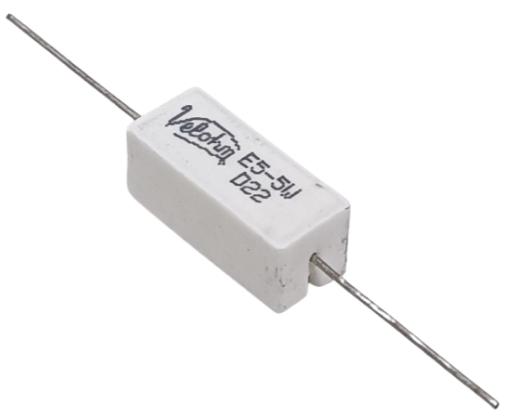
Cement Resistors
A type of wirewound resistor encased in a cement-coated ceramic shell. They are flameproof, rugged, and capable of handling very high wattage. Applications: Snubber circuits, motor braking, inverters, and power resistors in consumer appliances.
Fusible Resistors
Designed to act as both resistor and fuse. Under normal operation, they limit current like a standard resistor, but under overload they open the circuit, providing protection. Applications: Power supplies, CRT televisions, and monitors where space is limited and dual-function components are useful.
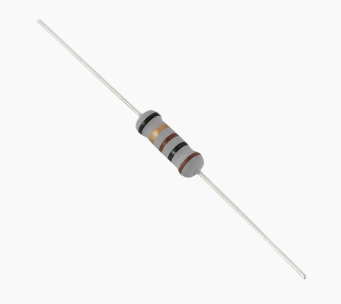
Flameproof Resistors
Coated with flame-retardant epoxy to prevent ignition during overheating or failure. They offer enhanced safety while still functioning like ordinary film resistors. Applications: Household appliances, TVs, and any consumer electronics requiring fire safety compliance.
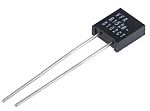
Metal Foil Resistors
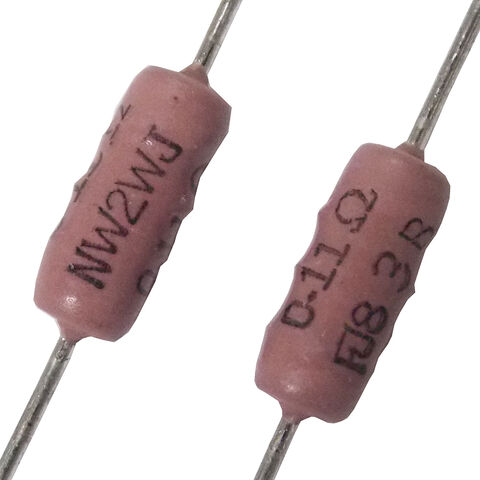
Use an ultra-thin foil of resistive metal bonded to a ceramic substrate. These are the most precise resistors available, with tolerances as tight as ±0.005% and temperature coefficients close to zero. They have minimal noise and drift over decades of use. Applications: Aerospace, metrology, medical imaging, calibration equipment, and other ultra-precision systems.
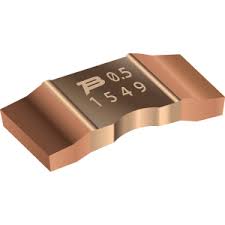
Current Sense Resistors
Special low-ohmic resistors (often just a few milliohms) designed to measure current by producing a tiny voltage drop. Many come in 4-terminal Kelvin configurations to improve accuracy. They are low inductance, thermally stable, and robust. Applications: Battery management systems, automotive ECUs, motor controllers, and switching power converters.
Precision Wirewound Resistors
A specialized type of wirewound resistor, wound very carefully and often laser-trimmed to achieve exceptionally high precision and stability. Available in non-inductive designs to reduce frequency limitations. Applications: Laboratory instrumentation, analog filters, calibration gear, and signal conditioning.
Thin Film Resistors
Made by depositing an ultra-thin metal film (like nichrome) on a ceramic or silicon substrate. They are extremely accurate (up to ±0.1%), very low noise, and have stable long-term performance. Applications: Op-amp feedback networks, medical electronics, ADC/DAC precision circuits.
Thick Film Resistors
Created by screen-printing resistive paste onto ceramic substrates and firing it at high temperatures. Less accurate than thin-film (tolerances around ±1% to ±5%), but they are cheap, durable, and compact. Applications: Mass-market electronics, SMD resistor networks, hybrid ICs, and consumer devices.
MELF Resistors (Metal Electrode Leadless Face)
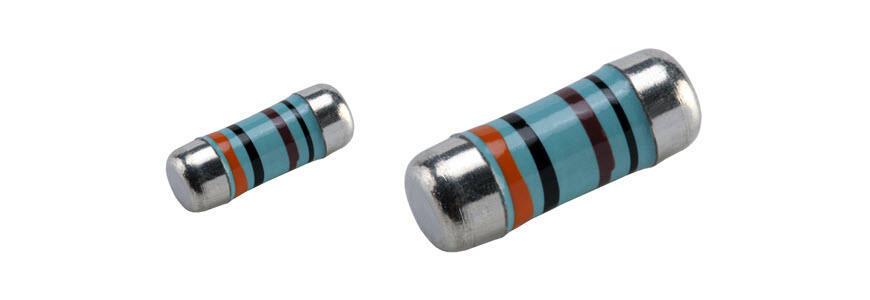
Cylindrical surface-mount resistors with metalized ends. Built by depositing a resistive alloy (often nichrome) on a ceramic rod, then trimming it with a laser groove. The cylindrical shape makes them mechanically stronger than chip resistors, with better pulse load handling and reliability. However, they can roll off PCBs during assembly, so they require special pick-and-place equipment. Applications: Automotive electronics, industrial controllers, RF circuits, and high-reliability SMT boards.
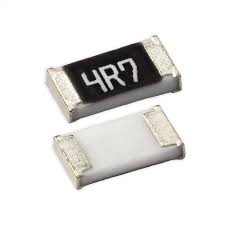
SMD Chip Resistors
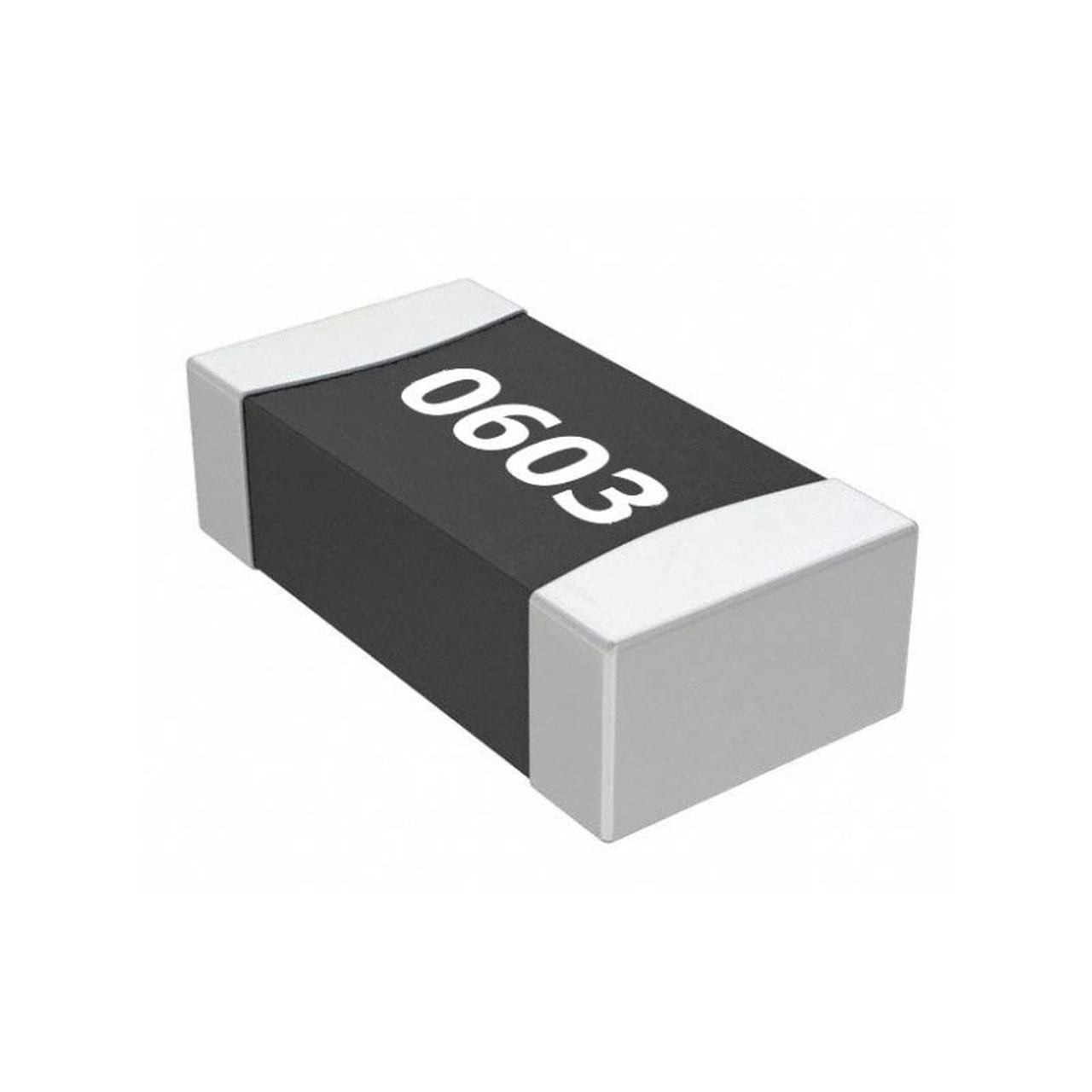
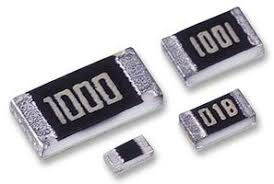
Rectangular flat resistors for surface-mount applications. Available in thin film (for precision) and thick film (for cost-effective general use) versions. They are compact, mass-produced, and highly standardized. Applications: Smartphones, laptops, IoT devices, and practically every modern PCB.
Array or Network Resistors
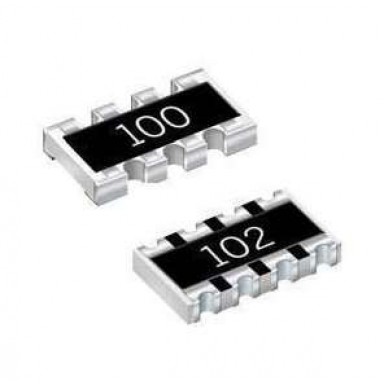
Multiple resistors fabricated in a single SIP (single in-line) or DIP (dual in-line) package. This saves PCB space and improves resistor matching in circuits. Applications: Pull-up/down networks, memory modules, bus termination, and digital logic interfacing.
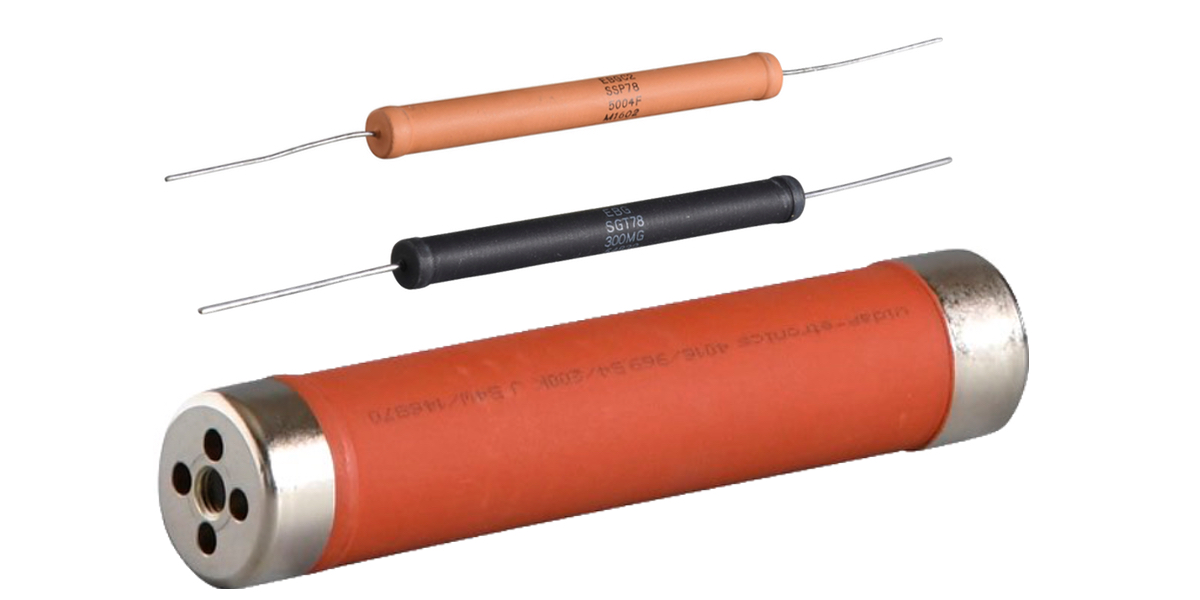
High Voltage Resistors
Engineered with long ceramic bodies, extended creepage distances, and special coatings to withstand very high voltages (often kilovolts). Applications: CRT televisions, oscilloscopes, X-ray generators, laser power supplies.
Non-Inductive Resistors
Designed using bifilar winding techniques or special film cuts to cancel inductance. Provide accurate resistance without the parasitic coil effect. Applications: High-frequency circuits, RF amplifiers, fast pulse circuits, and high-speed switching.
Pulse Resistors
Constructed with reinforced thermal paths to survive short-duration, high-energy pulses without damage. Designed with low inductance and robust surge ratings. Applications: Automotive ignition systems, lightning protection, surge suppression, and SMPS.
Vitreous Enamel Resistors
Made of a wirewound core coated in vitreous enamel, which provides a hard, moisture-proof, heat-resistant shell. They are mechanically rugged and long-lasting. Applications: Harsh outdoor environments, industrial heating, and power testing.
Quick Glance: Fixed Resistors
Resistor Type
Construction
Typical Tolerance
Key Features
Common Applications
Carbon Composition
Carbon powder + resin molded into rod
±5% to ±20%
High pulse tolerance, noisy, obsolete
Vintage electronics, surge circuits
Carbon Film
Carbon film on ceramic, spiral trimmed
±2% to ±5%
Better stability than composition, low cost
General-purpose electronics
Metal Film
Metal layer vacuum-deposited on ceramic
±0.5% to ±1%
Low noise, precise, stable temperature coefficient
Precision analog, audio, instrumentation
Metal Oxide Film
Tin oxide film on ceramic
±1% to ±5%
Flameproof, heat-resistant
Industrial power supplies
Wirewound
Resistive wire wound on ceramic core
±0.1% to ±5%
High power, accurate, inductive at high frequencies
Motor drives, industrial controls
Cement (Sand/Ceramic)
Wirewound inside cement or ceramic casing
±5%
Flameproof, rugged, high wattage
Inverters, motor braking
Fusible
Resistor that acts as fuse
±5%
Circuit protection + resistance
SMPS, CRT TVs, monitors
Flameproof
Coated with flame-retardant material
±1% to ±5%
Won’t ignite under overload
Safety-critical consumer electronics
Metal Foil
Thin metal foil bonded to ceramic
±0.005%
Ultra-precise, extremely low TCR
Aerospace, medical, metrology
Current Sense
Low-ohmic metal strip, often 4-terminal
±1% to ±5%
Measures current via voltage drop
Battery management, automotive ECUs
Precision Wirewound
Controlled winding and trimming
±0.1% to ±1%
Non-inductive options, low drift
Lab instruments, analog signal conditioning
Thin Film
Thin resistive layer on ceramic/silicon
±0.1%
Low noise, high stability
Op-amp networks, precision analog
Thick Film
Resistive paste printed on ceramic
±1% to ±5%
Inexpensive, robust
Consumer electronics, hybrid ICs
MELF
Cylindrical SMD with metalized ends
±0.1% to ±5%
High pulse load, reliable, moisture-resistant
Automotive, industrial SMT
SMD Chip
Rectangular resistive element
±0.1% to ±5%
Compact, automated assembly
Smartphones, laptops, IoT devices
Array/Network
Multiple resistors in one package
±2% to ±5%
Space-saving, matched values
Pull-up/down networks, memory modules
High Voltage
Long body with special coating
±1% to ±5%
Withstands kV range, high creepage distance
CRTs, X-ray, HV power supplies
Non-Inductive
Special winding or trimming to cancel inductance
±0.1% to ±1%
Ideal for high-frequency circuits
RF, audio, fast switching
Pulse
Built for surge energy absorption
±5%
High pulse energy capacity
SMPS, ignition systems, lightning protection
Vitreous Enamel
Wirewound core coated with enamel
±1% to ±5%
Moisture-proof, heat-resistant, durable
Harsh industrial/outdoor environments
Metal Electrode Leadless Face (MELF)
Cylindrical SMD with metal caps
±0.1% to ±5%
Excellent reliability, better than chip resistors
Precision SMT, automotive, industrial control
Variable Resistors: The Tunable Titans
Need to tweak resistance on the fly? Variable resistors let you dial it in, whether for user controls or fine-tuning.
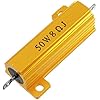
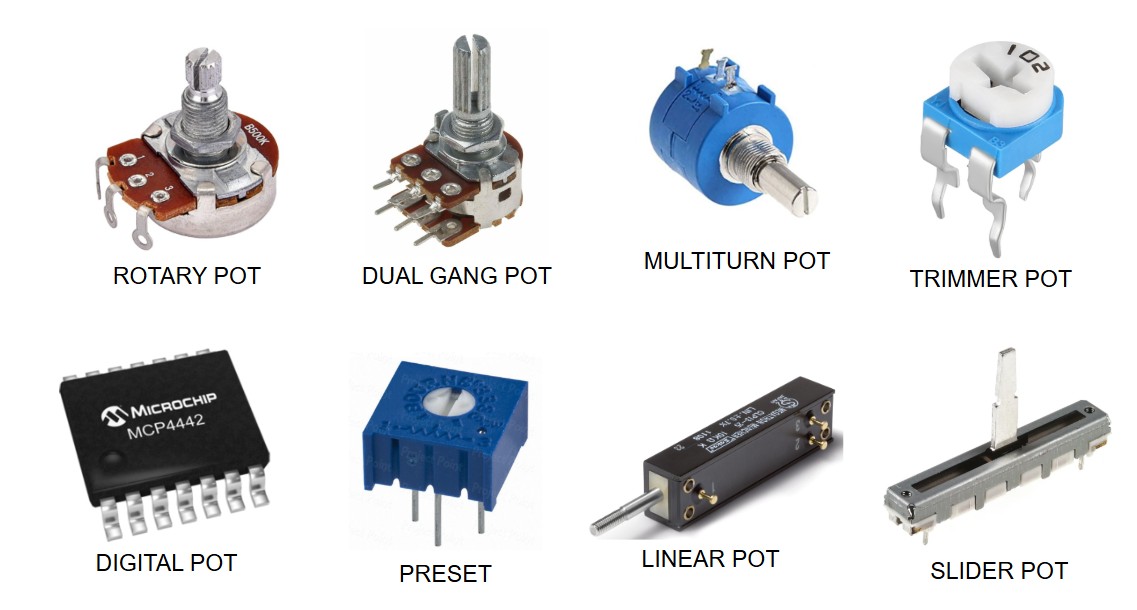
Potentiometers (Pots)
A potentiometer is a three-terminal variable resistor that adjusts resistance using a wiper moving across a resistive track. The wiper can rotate (rotary type) or slide (linear/slider type), allowing smooth control of resistance.
Linear pots change resistance evenly with movement, making them ideal for position sensing, motor control, and measurement systems.
Logarithmic (audio-taper) pots are shaped to match how humans perceive sound, making them the standard choice for volume controls and audio applications.
Potentiometers are found in a wide range of applications:
Industrial systems – sensor calibration, motor drive tuning, instrumentation.
Smart devices – often combined with microcontrollers or digital pots for automated adjustment.
Modern versions use materials like conductive plastic, cermet, and hybrids, which provide high durability, precision, and long life. This ensures they remain a reliable choice even alongside fully digital alternatives.
Depending on the design and use case, potentiometers can be classified into several types, such as:-
Rotary Pot
The classic knob-based potentiometer, still the most common type in 2025. It adjusts resistance by rotating a shaft. Rotary pots remain essential for audio volume control, LED dimmers, motor speed adjustment, and analog tuning in consumer electronics. Modern versions often come with improved carbon or conductive plastic tracks for smoother operation and longer lifespan.
Dual Gang Pot
Two rotary potentiometers mounted on a single shaft. Widely used in stereo audio systems, where the left and right channels must be adjusted together. In 2025, dual-gang pots are also popular in DIY synthesizers, smart speakers, and multi-channel sensor calibration.
Multiturn Pot
Designed for fine adjustments over multiple shaft rotations (typically 5, 10, or 20 turns). Provides high precision and stable resistance control. These are heavily used in industrial calibration, laboratory instruments, aerospace electronics, and medical devices where exact tuning is critical.
Trimmer Pot
Small, PCB-mounted potentiometers used for internal calibration. Once adjusted, they are rarely changed again. In 2025, trimmers are commonly used in IoT sensor modules, motor driver calibration, power supplies, and wearable devices for setting voltage or reference levels.
Digital Pot
A modern IC-based potentiometer that replaces mechanical adjustment with digital control (via I²C, SPI, or up/down logic). Digital pots are programmable, offer remote tuning, and are immune to mechanical wear. Today they are widely used in smart home devices, IoT gadgets, robotics, and automotive electronics.
Preset
A factory-set adjustable resistor (similar to a trimmer) but intended for one-time adjustment during manufacturing or servicing. In 2025, presets are widely used in consumer electronics, medical devices, and battery-powered gadgets to lock a circuit into a specific condition permanently.
Linear Pot
Instead of rotating, the wiper moves in a straight line to vary resistance. Linear pots are reliable in measurement equipment, CNC machines, robotics, and industrial position sensors. In 2025, they are also common in automotive throttle position sensing and electric vehicles.
Slider Pot
A subtype of linear pot with a sliding handle, offering an intuitive visual scale of adjustment. Popular in audio mixers, equalizers, and lighting control panels. Modern slider pots often integrate touch-sensing technology and LED indicators for smart interfaces in 2025.
Rheostats
Like potentiometers but beefier, these two-terminal giants handle high power. They’re used to control motor speeds in fans or pumps, or as variable loads in lab tests. Think industrial machinery or heavy-duty experiments.
Special Resistors: The Smart Sensors
These resistors adapt to the world around them, making them perfect for sensing or protection.
Thermistors
Temperature-sensitive champs. NTC thermistors drop resistance as things heat up; PTC ones increase it. NTCs are in thermometers, car engines, and battery chargers, while PTCs protect against overcurrent in power supplies.
Photoresistors (LDRs)
Light makes their resistance drop. Made from cadmium sulfide, they’re simple and effective in streetlights, camera light meters, or solar-powered sensors.
Varistors (MOVs)
These voltage-sensitive resistors clamp surges, protecting circuits. They’re the muscle behind surge protectors and ESD safeguards in phones and laptops.
Magnetoresistors
Magnetic fields change their resistance, making them ideal for hard drive read heads, car wheel sensors, or navigation compasses.
Current Sense Resistors
Low-ohm precision resistors that measure current flow. They’re critical in battery management systems, motor drives, and power supplies.
High-Frequency/RF Resistors
Built for minimal interference at high frequencies, these are the go-to for telecom gear, radar, and microwave circuits.
Resistor Networks & Arrays
Multiple resistors in one package, saving space on PCBs. They’re used for pull-up/pull-down resistors in digital circuits or compact designs.
Picking the Perfect Resistor
Choosing a resistor is like picking the right tool for a job. Consider:
Power: Calculate dissipation (P = I²R or P = V²/R) to avoid meltdowns.
Precision: Need ±0.1% for a lab tool or ±5% for a simple LED circuit?
Environment: High heat or vibration? Go for stable, rugged options like MELF or metal film.
Size: Through-hole for breadboards, SMD for sleek production boards.
Frequency: Skip inductive wirewounds for RF work.
Hack: Grab a resistor kit with common values (10Ω to 1MΩ) to experiment without breaking the bank. Always check datasheets for power and temperature specs.
Bringing It to Life
Let’s say you’re building a smart home gadget, like a light-sensing dimmer:
A photoresistor detects ambient light to adjust brightness.
A digital potentiometer lets your microcontroller fine-tune the output.
Metal film resistors ensure stable voltage dividers for clean signals.
A varistor guards against power spikes.
This mix delivers a responsive, reliable device.
Wrapping Up
Resistors are small but mighty, enabling everything from blinking LEDs to satellite systems. Knowing the difference between carbon film and metal foil, or a potentiometer and a thermistor, gives you the edge to build better circuits. So, grab your multimeter, spark up a project, and let us know what you’re creating! What’s your favorite resistor trick? Drop it in the comments.
The world of robotics is constantly evolving, and a new player has just stepped onto the scene, poised to revolutionize industrial automation and beyond. Unitree Robotics, a name synonymous with cutting-edge quadruped technology, has officially unveiled the A2, a robot that’s far more than just a mechanical marvel—it’s a genuine workhorse built for the toughest jobs.
Dubbed the “Stellar Explorer” by its creators, the A2 is an industrial-grade quadruped robot designed with one mission in mind: to carry heavy loads and operate in environments where other robots can’t. Let’s take a closer look at what makes this machine so impressive.
Built to Last, Designed to Endure
At a glance, the A2 showcases a sleek, purposeful design. Its body is constructed from a clever combination of aluminum alloy and high-strength engineering plastic, striking the perfect balance between durability and a manageable weight. At 37kg with its batteries installed, it’s light enough to be agile yet tough enough for industrial use.
But where the A2 truly shines is in its endurance. It’s equipped with a dual-battery system, packing two 9000mAh batteries for a total capacity of 18000mAh. This gives it a remarkable runtime:
Up to 5 hours of continuous walking, covering a distance of 20km, with no payload.
3 hours of operation, covering 12.5km, while carrying a substantial 25kg load.
For mission-critical applications, the A2 features a hot-swappable battery design. This means you can swap out batteries without ever having to turn the robot off, ensuring virtually uninterrupted operation—a game-changer for long-term tasks.
Power, Agility, and Unmatched Capability
The A2’s legs are where the magic happens. Driven by 12 high-precision joints, each powered by low-inertia inner rotor Permanent Magnet Synchronous Motors (PMSMs), the robot can achieve a maximum joint torque of 180 N·m. What does this mean in practice? Incredible agility and power. The A2 can:
Reach a top speed of 5 meters per second (18 km/h).
Climb slopes with an impressive incline of up to 45°.
Effortlessly step over obstacles as high as 30cm.
For even greater versatility, Unitree offers a “wheel-leg” option, allowing the A2 to adapt its performance for different terrains. The robot is also built to withstand harsh conditions, operating in a wide temperature range from -20°C to 55°C and boasting an IP56 protection rating, with its core components sealed to IP67.
See Everything, Go Anywhere
To navigate its environment with precision and confidence, the A2 comes equipped with an advanced perception system. This includes two industrial-grade LiDAR sensors, strategically positioned at the front and back, giving it a complete 360-degree view and eliminating blind spots. An HD camera and a powerful front light further enhance its vision, allowing it to operate autonomously and safely in complex or dimly lit spaces.
A Platform for Innovation
Under the hood, the A2 is a powerhouse of computing. It features an 8-core high-performance CPU alongside an Intel Core i7 processor, providing the computational muscle needed for sophisticated AI-driven tasks and user-developed applications.
Connectivity is robust and versatile, with wired options including RS-485, CAN, Gigabit Ethernet, and USB 3.0 Type-C ports. For wireless needs, it supports Wi-Fi 6 and Bluetooth 5.2, with optional modules for GPS, 4G, and vector-following to extend its capabilities even further.
Unitree is positioning the A2 as an open platform, inviting developers to build on its foundation. With support for Over-The-Air (OTA) upgrades and a 1-year warranty, the A2 is ready for the future.
In short, the Unitree A2 isn’t just a quadruped robot; it’s a testament to how far robotics has come. It’s a reliable, durable, and highly capable machine designed to take on the heavy lifting—and a whole lot more in the next era of industrial and exploration robotics.